Showing posts with label middle east. Show all posts

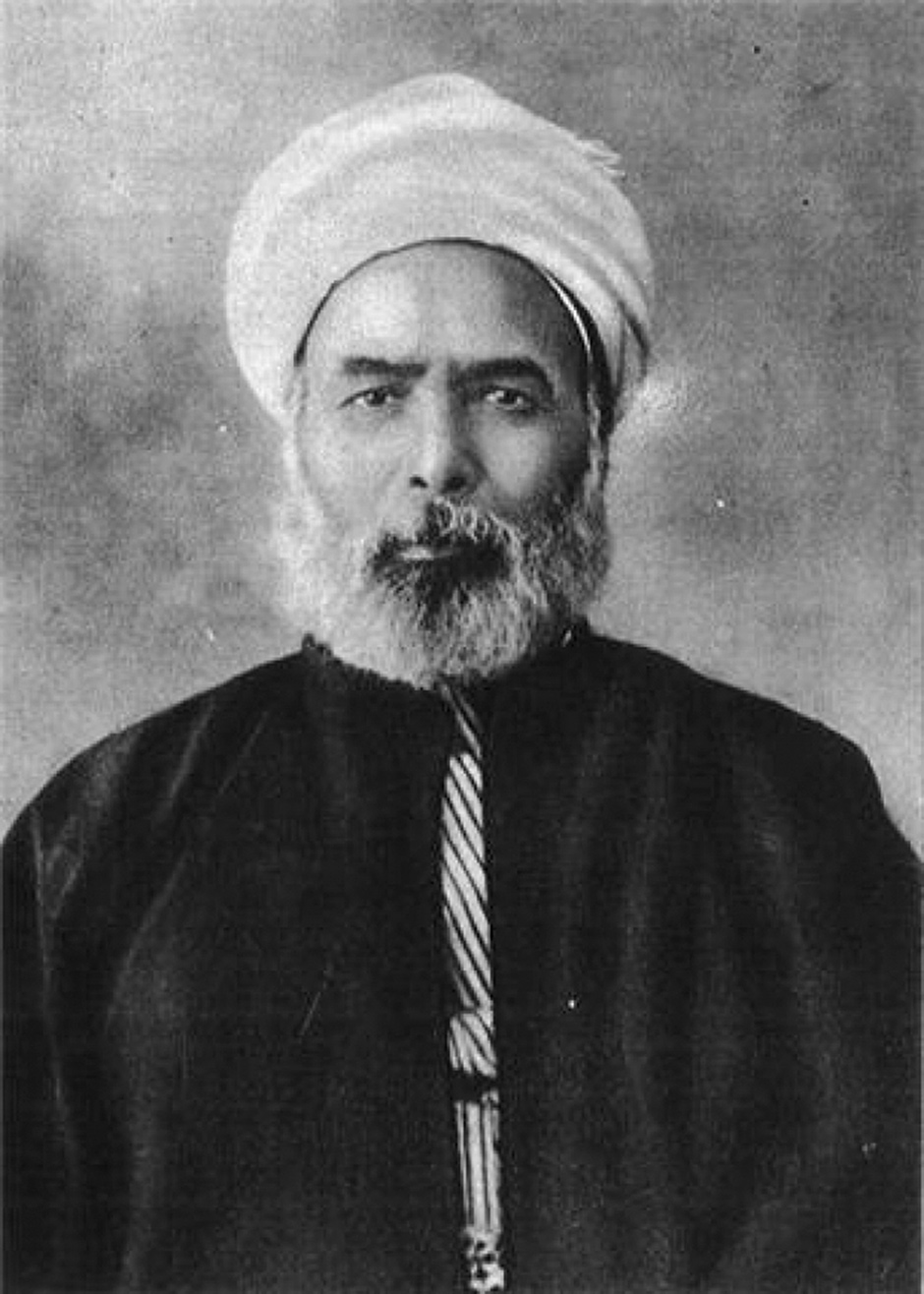
Jamal al-Din al-Afghani

Jamal al-Din al-Afghani

Jamal al-Din al-Afghani, often referred to as the founder of pan-Islam, was born in Iran. He attended madrasas (religious schools) in Iran and as a young man traveled to India, where he observed firsthand discrimination against Muslims by the ruling British government. After making the hajj (pilgrimage) to Mecca, al-Afghani moved on to Karbala and Najaf, the main centers of Shi’i pilgrimage in Iraq.

During the 1860s al-Afghani lived in Afghanistan before moving to Istanbul, where the ruling Sunni Muslim Ottoman elite did not accord him the respect and honor he felt he deserved. In 1871 al-Afghani moved to Egypt, where he lectured on the need for unity and reform in Muslim society.

His popular lectures attracted a following among young Egyptians, and he became the mentor to a future generation of Muslim reformers that included Muhammad Abduh and others.


Al-Afghani’s popularity, calls for political reform, and opposition to British influences in Egypt attracted the attention of the ruling authorities, and the khedive (viceroy) expelled him from Egypt.

He then returned to India, where he resumed teaching and writing on what he referred to as the Virtuous City—a society based on Islamic tenets and governed by honest, devout Muslim rulers. Al-Afghani argued that only a unified Muslim world could confront the Western imperial powers, particularly the British, on an equal basis.

He traveled to London and Paris, where he debated the role of science in Islam with Ernest Renan, the noted French philosopher. He spent two years in Russia before returning to Iran, where he vigorously opposed Nasir al-Din Shah (the Qajar ruler).

In Iran as in Egypt, al-Afghani also spoke out against British influence, calling for a constitutional, parliamentary government. Al-Afghani’s opposition to the monarchy forced him to leave Iran for Turkey, where he continued to write and lecture about the need for basic constitutional reforms throughout the Muslim world. Al-Afghani carried on this work until his death in 1897.

First and Second Afghan Wars

First Afghan Wars
First Afghan Wars

The two Afghan wars were caused by the growing rivalry for control of Central Asia between the Russian Empire and the British Empire. Because Afghanistan was the largest organized state in the Central Asian region, it became the main focus for both countries in what the British poet Rudyard Kipling would call the “Great Game.” The Great Game actually began during the Napoleonic Wars.

In 1810, while the British duke of Wellington was fighting the French in Spain, Captain Charles Christie and Lieutenant Henry Pottinger of the 5th Bombay Native Infantry Regiment left the village of Nushki in Baluchistan for their role in the game.

On April 18 Christie reached Herat, while Pottinger pursued his own mission in Persia. Finally, on June 30, 1810, the two agents were reunited in Isfahan, Persia, with both missions accomplished.


Over the next 25 years other British agents would follow Christie and Pottinger on great treks into Central Asia. Afghanistan was seen as the vital buffer state against the advance of the Russians and, while the British did not always desire to add Afghanistan to their empire, they always hoped that the ruler of the Afghans, the amir, would lend his support to them instead of the Russians.

The British concerns were realized in December 1837 when a Cossack leader arrived carrying a letter from Czar Nicholas I of the Romanov dynasty for the Afghan amir, Dost Mohammed. At the same time, Kabul was visited by a British officer named Alexander Burnes, who had served with the Bombay army.

By this time, Persia was allied to Russia. George Eden, Lord Auckland, and his chief secretary, Henry Macnaghten, suspected that Dost Mohammed had sided with the Russians. Having ascended the throne in June of 1837, Queen Victoria was now presented with the first serious crisis of her reign.

Ultimately, nothing would suit Auckland and Macnaghten other than a regime change in Kabul. In February 1839 the British Army of the Indus, under the command of Sir John Keane of the Bombay Army, began its march for Kabul. In the beginning, Auckland’s expectations that Dost Mohammed’s rule could not survive appeared to be justified.

In July 1839 the fortress of Ghazni fell before a furious British assault and Dost Mohammed’s forces melted away. Meanwhile, the Afghans faced a combined Sikh-British expedition coming up from Peshawar. In August 1839 Shah Shuja was crowned again the amir in Kabul, and Dost Mohammed sued for peace.

Macnaghten lacked the temperament to deal with the tribesmen and, in 1841, slashed the subsidies that had earned their loyalty to Shah Shuja. As young officers pursued inappropriate and culturally serious affronts to Afghan women, relations worsened further. The British commander, Major-General William Elphinstone, lacked both the ability and the courage to face the mounting crisis.

By the end of November all Macnaghten and Elphinstone could think of was retreat. On December 11 Macnaghten met with Dost Mohammed’s son Akbar Khan to make final a British withdrawal. At a second meeting on December 23, Macnaghten was taken by surprise and killed. Elphinstone continued planning for the retreat from Kabul, which began on January 6, 1842.

The British and Indian troops were harassed and sometimes attacked by the Afghans along every foot of their retreat. On January 13, the last European finally reached safety at the British post of Jalalabad. Shah Shuja himself had been assassinated.

In February 1842 Edward Law, Lord Ellenborough, replaced the unlucky Auckland as the area’s governor-general, and plans were made to avenge their fallen countrymen. A punitive force commanded by Major-General George Pollock of the Bengal army entered Afghanistan again. Despite fierce resistance from Akbar Khan’s forces, Pollock reentered Kabul in September 1842.

Having made their point, the British evacuated Kabul again in December 1842 and this time reached British territory safely. The British permitted Dost Mohammed to take back the throne, but the overall aim of the war had been achieved—Afghanistan remained in the British camp and the Russian plans were thwarted.

During the next 40 years the British and Russian Empires continued their seemingly inexorable advance toward one another through Central Asia. During the Sikh Wars, the British defeated the once independent realm of the Sikhs in the Punjab, firmly adding it to their growing Indian Empire.

Afghan Warior
Afghan Warior
Although British rule was shaken during the Indian Mutiny of 1857–58, the attention of the British was still focused on the ambitions of the Russians to the north and west. With the assumption of direct British rule in the aftermath of the mutiny, real decision-making shifted decisively from the British governors-general in India to London.

The Great Game was definitely on again, if it ever had stopped. In 1877 the Russians went to war with Turkey and although the Congress of Berlin in 1878 promised peace, the stage was set for another confrontation over Afghanistan.

Those who supported the aggressive Forward Policy against Russia, including Robert Bulwer-Lytton, the viceroy, demanded action be taken against Afghanistan. On November 3, 1878, British diplomat Neville Chamberlain appeared at the Khyber Pass to demand passage for his delegation to enter Kabul. Afghan border troops turned him back. On November 21 the British crossed the border into Afghanistan, 39 years after the first British invasion.

As before, the Afghans were in no position to withstand the determined advance. In Kabul, Sher Ali relinquished his throne to his son Yakub Khan. After a winter of guerrilla war, Yakub Khan realized that making peace with the British was the best policy.

In May 1879 Yakub Khan accepted a permanent British resident (who would actually serve as the real power in the country) in Kabul, Sir Louis Cavagnari. In July 1879 Cavagnari made his entrance into the Afghan capital.

In September mutinous Afghan troops killed Cavagnari. Although he had requested aid from Yakub Khan, the request was ignored, leaving the impression that the troops attacked the British with at least the unspoken agreement of the amir.

When news of the massacre reached India, Major General Frederick Roberts was given command of the Kabul Field Force in order to lead a quick British response to attempt to stabilize the situation in Afghanistan before the Russians might be tempted to take advantage of the British defeat.

Yakub Khan’s troops made a stand at the Shutargardan Pass, but a determined British push cleared them away. Yakub Khan, chagrined at Roberts’s determination, decided to make peace. However, the danger was far from past, and on October 5, 1879, Roberts was forced to fight another engagement with the Afghans.

The British now faced hostility from a different quarter. A Muslim holy man, Mushkh-i-Alam, preached a jihad, an Islamic holy war, against the British. This put the British force at Kandahar in peril. Once news reached them, Roberts began to gather a relief column to rescue them and his hard-pressed garrison at Kandahar.

Within two weeks Roberts set out with a force of 10,000 men. On August 31, 1880, after a march of 21 days, Roberts broke Ayub Khan’s siege of Kandahar. The next day Roberts decisively defeated him in open battle. With the relief of Kandahar the Second Afghan War came to a close.

Ayub Khan and Yakub Khan were both tainted by their treachery in British eyes, and Abdul Rahman, their cousin, became the amir in Kabul. Twice in 40 years the British had asserted their primacy in Kabul and won another round in the Great Game against the Russians.

Arabian Peninsula and British Imperialism

During the 19th century, the British extended their economic and political presence throughout the coastal areas of the Arabian Peninsula. With the largest and most powerful navy in the world, the British needed ports to serve as refueling stations and to replenish supplies of fresh foods and water for their sailors.

After the Suez Canal provided an easier and faster transportation route between Europe and Asia, the coastal areas of the Arabian Peninsula increased in importance.

In 1839 Britain occupied Aden on the southern coast of Yemen, then on the further fringes of the Ottoman Empire, making it a British Crown Colony. After the Suez Canal became a major trade route, Aden became a bustling port city and trading center.

Britain and the Ottomans clashed repeatedly over control of northern and southern Yemen. In the late 19th century, the British signed formal treaties with a number of tribes in the regions around the port of Aden; these became known as the Aden Protectorates.

The largest of these sultanates, sheikhdoms, emirates, and confederation of tribes was the two sultanates of Hadhramaut. In the early 20th century the British and Ottomans agreed to specific borders demarking their respective territorial claims.

Britain also sought to protect its vast holdings in India and to prevent rival European imperial powers from expanding into Asia by extending its control over neighboring areas both east and west of the Indian subcontinent.

Consequently, British foreign service officials in Delhi sought to extend British control along the Persian Gulf. The British secured a number of treaties with the ruling families along the Persian Gulf, which in Arab provinces was frequently referred to as the Arabian Gulf.

The patron-client relationship between Arab rulers in the Gulf and the British lessened Ottoman control and freed local rulers from Ottoman taxation while increasing their own political power.

The local economies were dependant on income from pearls and sponges obtained by divers who were paid by a few trading families who often had ethnic and commercial ties with Persia. Because the area was largely poverty stricken, local sheikhs were also interested in possible economic gains from ties with the British.

The first British treaty agreement in the region was with the sheikh of Muscat (part of present-day Oman) in 1798. Successive agreements were signed between the British and the ruling Al Khalifah clan in Bahrain in 1820 and with the Sabah family in Kuwait in 1899.

Under the latter, Britain had the right to conduct all the foreign relations for Kuwait, and no foreign treaties could be signed nor could foreign agents operate in Kuwait without the approval of Britain.

This enabled Britain to ensure that the proposed Berlin to Baghdad railway would not be extended to the Persian Gulf, and it also made Kuwait an unofficial British protectorate. Similar agreements were reached with the Thani clan in Qatar and with a number of local rulers in the Trucial Coast (present-day United Arab Emirates). As a result, acting through its surrogates, Britain was able to control the coastal areas along almost all of the Arabian Peninsula.

Arab Reformers and Nationalists

Rifa’a al-Tahtawi
Rifa’a al-Tahtawi

During the 19th century a number of Arab intellectuals led the way for reforms and cultural changes in the Arab world. Rifa’a al-Tahtawi from Egypt was one of the first and foremost reformers. A graduate of esteemed Muslim university al-Azhar, Tahtawi was sent to France to study as part of Muhammad Ali’s modernizing program.

He returned to Egypt, where he served as director of the Royal School of Administration and School of Languages, was editor of the Official Gazette, and Director of Department of Translations.

Tahtawi published dozens of his own works as well as translations of French works into Arabic. In A Paris Profile, Tahtawi described his interactions as a Muslim Egyptian with French culture and society.


His account was an open-minded and balanced one, offering praise as well as criticism for many aspects of Western civilization. For example, Tahtawi respected French originality in the arts but was offended by public displays of drunkenness.

Tahtawi urged the study of the modern world and stressed the need of education for both boys and girls; he believed citizens needed to take an active role in building a civilized society.

Khayr al-Din, an Ottoman official from Tunisia, echoed Tahtawi’s emphasis on education while also addressing the problems of authoritarian rule. He advocated limiting the power of the sultan through law and consultation and wrote the first constitution in the Ottoman Empire.

The Egyptian writer Muhammad Abduh dealt with the ongoing question of how to become part of the modern world while remaining a Muslim. He was heavily influenced by the pan-Islamic thought of Jamal al-Din al-Afghani.

Abduh taught in Lebanon, traveled to Paris, and held several government positions in Egypt. He became mufti of Egypt in 1899 and was responsible for religious law and issued fatwas (legal opinions on disputed points of religious law).

Muhammad Abduh
Muhammad Abduh

Abduh became one of the most highly respected and revered figures in Egypt, although some conservatives opposed his reforms and open-mindedness while some more radical nationalists berated him for not being liberal enough.

In his publications, including Face to Face with Science and Civilizations and Memoirs, he urged the spiritual revival of the Muslim and Arab world, arguing that Islam was not incompatible with modern science and technology. He also stressed the importance not only of law but of reason in Islamic society.

Originally from Syria, Muhammad Rashid Rida was a follower of Abduh. He moved to Egypt and founded the highly respected journal al-Manar. His writings had a wide influence on Islamic thought, and he became one of the foremost spokespersons for what has become known as political Islam. Rida also discussed socialism and Bolshevism and the role religion should play in contemporary political life.

Egyptian Abdullah al-Nadim edited several satirical journals and was a staunch supporter of the Urabi revolt of 1881–82. He also knew Jamal al-Afghani. Al-Nadim was exiled to Istanbul after his fiery nationalist stance earned him the enmity of the British.

Al-Nadim spoke openly about the growth of the nation (watan) and was one of the first modern Egyptian nationalists. In 1899 Anis al-Jalis started an Egyptian magazine that carried articles dealing with the role of women in society.

A new educated elite emerged as graduates of the many government and other schools that had been established as part of the reforming era of the Tanzimat entered public life. In the Sudan, the British founded Gordon College to educate male youth for government service.

Other schools founded by missionaries included the Syrian Protestant College (American University of Beirut, AUB), the Jesuit University St. Joseph in Beirut, and various Russian Orthodox schools scattered throughout Greater Syria.

The Alliance Israelite sponsored schools for Jewish students throughout the Ottoman Empire. Separate mission schools were also established for girls. A spirit of outward-looking, pro-Western thought prevailed, and many of the elites had extensive experience with the Western world. Many were bilingual in French or English.

Nineteenth-century Arab intellectuals, many of whom were Christians, fostered a literary renaissance with a revival of interest in the Arabic language. Some sought to modernize Arabic prose and poetic styles.

Butrus Bustani was one of the era’s foremost experts in the Arabic language. He also wrote a multivolume encyclopedia with thoughtful entries on science and literature as well as history. Numerous newspapers were published, especially in Cairo and Beirut.

Al-Muqtataf produced in Cairo by Yacoub Sarruf and Faris Nimr was one of the most famous. In 1875 the Taqla family founded al-Ahram, which became the premier newspaper in the Arab world. Many of these new journals were published in Egypt, where there was greater freedom of the press afforded by the British than in Ottoman controlled provinces.

Nationalism spread around the world in the 19th century, and the Arab provinces were no exception. A generation of Arab nationalists began to talk and write about the relationship of the Arabs within the Ottoman Empire and the role religion should and did play in modern nationalism. These early nationalists did not deny the importance of religion but used nationalism as their point of reference.

The first group that dealt with the controversial issue of separation from the Ottoman Empire on the basis of national identity was formed at the Syrian Protestant College in Beirut in 1847. Its members, who met secretly to avoid prosecution from the Ottoman intelligence services, included Faris Nimr.

They met under the guise of being a literary society; while the members did discuss literature they also delved into the important political questions facing the declining Ottoman Empire as well as the emergence of nascent Arab nationalism.

Various groups continued to meet at the college from 1847 to 1868 when a Beirut society began. Its members discussed the key political issues of Arab identity. The so-called Darwin affair of 1882 caused a number of the leading figures of the movement to leave the college.

In a public address, Dr. Edwin Lewis, a professor at the college, discussed Darwin’s theory of evolution; his positive conclusions about Darwin’s controversial theory roused the enmity of conservative American Christians on campus.

They attacked Lewis in print and forced his resignation. Several of the liberal Arab junior faculty, including Nimr and Sarruf, resigned in outrage and moved to Cairo, where they became leading figures among Christian Arab secularists.

Abd al-Rahman al-Kawakibi was born in Syria, but after his writings about Arab identity roused the enmity of Khedive Abbas Hilmi, he left Syria and became a frequent contributor to al-Manar, the journal edited by Rashid Rida.

In his writings, Kawakibi discussed the key role of the Arabs in Islam; he also described the decadence and weaknesses of the Ottoman Empire. He stressed the importance of Arab unity. Another Arab nationalist, Jurji Zaidan, wrote for the journal al-Hilal.

Whereas pan-Islamists, such as al-Afghani, believed in the supremacy and integrity of the Islamic legacy, panArabists like Zaidan emphasized its uniquely Arab character and the importance of history, language, and culture over religion. The ideas of these early Arab nationalists would come to fruition with World War I and the collapse of the Ottoman Empire in the early 20th century.

British Occupation of Egypt

The British militarily defeated Egyptian nationalist forces led by Ahmed Urabi at the Battle of Tel-el-Kebir in 1882
The British militarily defeated Egyptian nationalist at the Battle of Tel-el-Kebir in 1882

Through diplomatic negotiations in 1881–82, the British and French reached an agreement whereby the French occupied Tunisia in North Africa and Britain took Egypt.

The British militarily defeated Egyptian nationalist forces led by Ahmed Urabi at the Battle of Tel-el-Kebir in 1882. The Dufferin Commission was then sent to Egypt to make recommendations as to what should be done.

Initially, the British claimed that the occupation was a temporary one, but geopolitical considerations and ongoing conflict in the Sudan under the Mahdi led to the long-term occupation of Egypt by the British.


The British superimposed their own administration and became the de facto rulers of Egypt while maintaining the facade of Egypt as an autonomous province of the Ottoman Empire as arranged during the rule of Muhammad Ali.

The khedive was retained, with British advisers in the key government offices. A nonelective legislative council of Egyptians served in an advisory capacity. This two-tiered, often-cumbersome administration led to British control over all aspects of government from the judicial to financial to education.

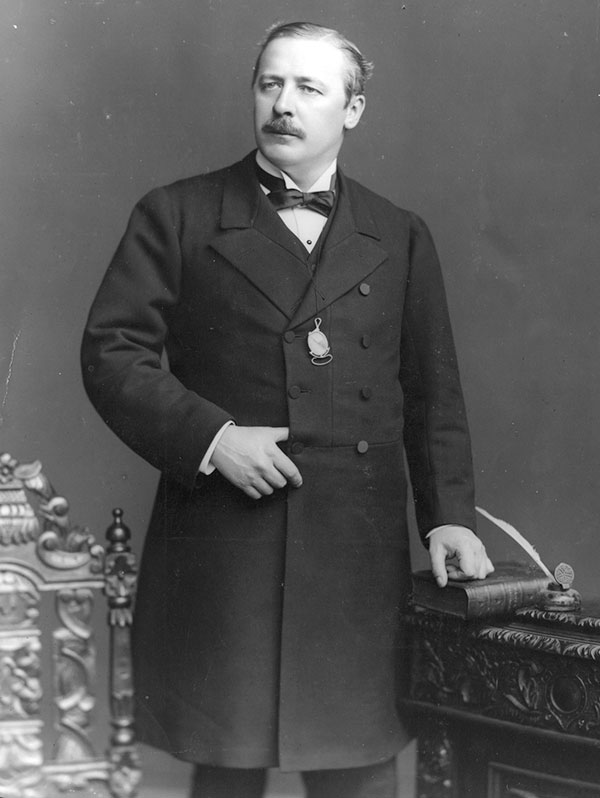
Evelyn Baring, later Lord Cromer, was appointed consul general in 1883. Cromer was the virtual ruler of Egypt until 1907, when he was forced by the British government to retire following an increase of Egyptian nationalist discontent.

Evelyn Baring, 1st Lord of Cromer

A fiscal conservative, Cromer attempted to lessen the financial burdens on the fellaheen (peasants) but devoted few resources to education or other social programs.

The British did improve the irrigation systems in Egypt and also abolished forced labor. The railway system that benefited British commercial interests was also extended to the detriment of road and water transportation systems.

Mixed courts dealt with all cases involving foreigners, and civil courts with Egyptian judges and lawyers served the Egyptian population. A lively press that covered a wide range of political and social issues also developed, although the British carefully monitored it for subversive or anti-British opinions.

Over the years the number of British advisers proliferated. The presence of foreign troops and often arrogant British bureaucrats increased nationalist opposition to the occupation, particularly among the urban educated youth.

Mustafa Kamil who led the Watan (Nation) Party from 1895 until his death in 1908 was one of the most vociferous and fiery of the new generation of Egyptian nationalists.

Much to the dismay of the British, Tewfik’s successor, Khedive Abbas Hilmi supported the nationalist cause. Mounting Egyptian nationalism led to the emergence of political parties that the British vainly attempted to control. British control was not formalized until Egypt was declared a British protectorate with the outbreak of World War I in 1914.

Dost Mohammed

Dost Mohammed
Dost Mohammed

Dost Mohammed Khan is remembered as a powerful and charismatic ruler who reigned over Afghanistan from 1826 until his death in 1863 and made significant attempts to unite the troubled country.

The times in which he ruled were turbulent in Afghanistan because rival clans struggled for power against one another, even as various members of those clans fought among themselves as they attempted to gain ascendancy by unseating those who were already in power.

Dost Mohammed’s reign also coincided with the period in which Great Britain and Russia were vying for control of Asian lands that they had identified as essential to their expansionist goals.


From the beginning, Dost, which means “friend,” was faced with repeated attempts to unseat him that arose from the jealousy of his numerous brothers and nephews. His most serious rival was Shah Shujah al-Moolk, the Afghan king and cousin whom he had deposed.

Their rivalry was part of the continuing battle for power in Afghanistan that existed between two branches of the Durrani clan. Shah Shujah represented the Saddozai, while Dost was a member of the rival Barakzai clan. When Shujah left Afghanistan, he took his entire harem and royal jewels, including the famous Koh-i-noor diamond.

Once in power, Dost Mohammed declared himself the Amir-al-momineen of Afghanistan, the “Commander of the Faithful,” which allowed him to exercise almost totalitarian power. In order to protect himself from his numerous enemies, the Dost set up his power base in Kabul and surrounded himself with a limited bureaucracy composed of his sons and matrimonial allies.

This move also eradicated a good deal of the crime and corruption that had flourished under previous monarchs. He also banned the sale of alcohol and intoxicating drugs and curtailed gambling and prostitution.

In 1834 his rival Shah Shujah began a revolt against Dost, who was victorious, but was unable to regain control of Peshawar, which had been taken by the Sikhs. To gain support, Dost Mohammed encouraged his subjects to view his campaign against the Sikhs as a jihad (holy war).

Dost Mohammed surrendered to British

On April 30, 1837, an Afghan force of some 30,000 men and 50 cannons faced the Sikhs in the Battle of Jamrud. When the battle was over, the Afghans had lost 1,000 men, but the cost to the Sikhs had been twice that. Despite the Afghan victory, Sikh leader Ranjit Singh retained his hold on Peshawar.

However, Dost Mohammed had succeeded in establishing a regular Afghan army for the first time. This army was made more powerful by the use of the long-barreled muskets made by Kabul gunsmiths that were better than the guns used by the British army in India.

With Dost in firm control of Afghanistan, both the British and Russians began to court his favor. Generally, Dost favored British efforts to block Russian and Persian advances. However, he was also willing to turn to the Russians if the British failed to meet his demands.


The British government then dispatched Sir Alexander Burnes to Afghanistan to meet with Dost and agreed to return Peshawar to Afghanistan to promote stability on the frontier.

Subsequently, Britain attacked Afghanistan and convinced various chiefs to support them against Dost Mohammed. With diminishing forces, Dost was soon reduced to fighting with only a couple of hundred men. Eventually, he tired of living the life of a fugitive and surrendered in 1840.

In 1857 Dost concluded a comprehensive alliance with the British by which he received an annual subsidy from Britain, although he remained neutral when the Indian Mutiny occurred in 1857. Britain became convinced that he presented a threat to British control of India.

The British treated him with full respect and installed him and his family in a mansion. However, his ambitious son Akbar refused to join them, attacked Kabul, and slaughtered 16,000 British soldiers and the English there. Finally, Britain decided to restore Dost to power, but to implement a hands-off policy in Afghan affairs.

In May 1863 Dost conquered the City of Herat, unifying the remaining areas of Afghanistan under one rule, but he never recovered Peshawar, which is now part of northwestern Pakistan. Dost was succeeded by his fifth son, Sher Ali Khan, but he was challenged by his brothers and Afghanistan continued to be wracked by civil wars.

Charles Gordon

Charles George Gordon

Charles George Gordon was a British army officer. His famous early exploits in China between 1862 and 1864 earned him the name “Chinese Gordon,” while his later actions and death in Khartoum, the Sudan, gained him the epithet “Gordon of Khartoum.”

Gordon was trained as an army engineer and saw action in the Crimean War and the Indian Mutiny. He was sent to China in 1860 and took part in the capture of Beijing (Peking) in the second Anglo-Chinese War. In 1862 he was sent to Shanghai, China’s premier port of international trade. Southern

China was then in the throes of the serious Taiping Rebellion (1850–64), centered in Nanjing (Nanking), the rebel capital. In 1860 the army of the Taiping Loyal King threatened Shanghai. To defend themselves the rich merchants of the city commissioned Frederick Ward, an American adventurer, to organize a mercenary army.


With soldiers recruited from among Western deserters, Ward’s rifle squadron captured Sunjiang (Sunkiang), a town near Shanghai, and turned back the rebels. In 1861 Ward recruited 100 European officers and expanded his force with 4,000–5,000 Chinese and 200 Filipino soldiers, whom he armed and drilled in the Western fashion.

This force won many battles and repulsed another attack on Shanghai in 1862, for which the Chinese government named it the Ever-Victorious Army. After Ward died of wounds in 1862, another American, Henry A. Burgevine, was named commander, but he was soon relieved from command due to the many problems he caused.

Gordon was next appointed to lead this army with British government permission. He served under the overall command of Li Hongzhang (Li Hung-chang), governor of Jiangsu (Kiangsu) Province, in which both Nanjing and Shanghai were located. Between 1862 and 1864 the Ever Victorious Army fought in 33 actions against the Taipings.

Gordon’s most famous victory was taking Suzhou (Soochow), an important city between Nanjing and Shanghai, from the rebels. The Taiping Rebellion ended in 1864 with the capture of Nanjing and the suicide of the rebel leader.

The Qing (Ch’ing) government rewarded Gordon with the rank of general, which entitled him to wear the Yellow Jacket (equivalent of a high military decoration). With the end of the rebellion, the Ever Victorious Army was disbanded, and Gordon returned to England for reassignment by the British army.

The Ever Victorious Army was important, because it was the first Chinese fighting force to use Western firearms and training; its effectiveness showed the superiority of Western military techniques and technology.

Gordon was stationed in Britain until 1871 and then undertook tours of duty overseas, mainly in Egypt and the Sudan. In 1884 the British government sent him to the Sudan to extricate the Egyptian garrison (Egypt claimed overlordship over the Sudan) from the forces of the Mahdi, a Sudanese religious leader in revolt against the Egyptians.

Gordon’s small force was besieged in the Sudanese capital, Khartoum, by the forces of the Mahdi and was killed two days before a British relief force arrived on January 22, 1885. In death, this colorful British officer who had earlier earned the name “Chinese Gordon” became known as “Gordon of Khartoum.”

Abdul Hamid II

Abdul Hamid II
Abdul Hamid II

Abdul Hamid II, who reigned 1876–1909, became sultan after his brother, Sultan Murad V, was deposed because of mental illness. He came to power by promising reforms and support for a constitution, but he soon reasserted the sultan’s traditional authoritarian powers.

At the time, the Ottoman Empire was beset with problems. The empire was deeply in debt, nationalist rebellions had broken out in Bosnia and Bulgaria, war raged in Serbia and Montenegro, and Russia threatened to further its expansion into Ottoman territories.

However, the promulgation of a constitution and establishment of a parliament in 1877 seemed to promise new reforms that would perhaps revive the empire’s former strength.


The constitution, drawn up by the able administrator and reformer Midhat Pasha, was shortlived, as Abdul Hamid II used the 1877 war with Russia as the excuse to disband parliament and suspend the constitution. He then removed Midhat from power and sent him into exile.

Abdul Hamid II hired German advisers to rebuild the army and administer the finances. To the dismay of the British, German influence within the empire increased steadily until World War I.

Abdul Hamid II turned a blind eye to the British occupation of Egypt, although ostensibly Egypt remained part of the Ottoman Empire, it became a de facto part of the British Empire ruled by British “advisers.”

Abdul Hamid II limited the power of government bureaucrats and concentrated power within the sultanate. He also established strict censorship over publications and monitored political activities through a network of secret agents.

Although most of his predecessors had paid scant attention to their title as caliph, Abdul Hamid II reemphasized his role as caliph and protector of the Muslim world.

Abdul Hamid II vainly attempted to use the appeal of the pan-Islamic movement, popularized by Jamal al-Din al-Afghani, to counter the growing nationalism within the diverse Ottoman Empire. The construction of the Hijaz railway to facilitate the pilgrimage to Mecca and Medina was part of his campaign to foster Islamic support.

Abdul Hamid II also rejected the Zionist offer made by Theodor Herzl to pay a portion of the huge Ottoman debt in exchange for an Ottoman charter allowing Zionist colonization of Palestine.

Herzl was told that the sultan was not in the business of “cutting off his arm,” meaning that Palestine was considered an integral part of the empire, but that Jews were welcome to live there.

Fearing assassination, he made himself a virtual prisoner in the palace of Yildiz. Abdul Hamid’s authoritarian rule increased discontent within the military. As a result, the Young Turks, dominated by army officers, took over the government in 1908.

Abdul Hamid II was forced to accept the reinstitution of the 1876 constitution. In 1909 he abdicated in favor of his brother, who became Sultan Muhammad V. Abdul Hamid II spent his last years under house arrest at the Beylerbeyi Palace in Istanbul, where he died in 1918.