Showing posts with label christianity. Show all posts

Pope Leo XIII


Pope Leo XIII was born Gioacchino Vincenzo Raffaele Luigi on March 2, 1810, in Carpineto and died on July 20, 1903, in Rome. Young Raffaele was sent at age eight to study at the Jesuit school at Viterbo, where he attained a doctorate of theology in 1832 and was ordained a priest on December 31, 1837.

In January 1843 he was appointed papal nuncio (diplomat) to Brussells, Belgium, and elevated to archbishop of Damiata, Belgium, on February 19, 1843. He worked with the Belgium royalty to establish Catholic schools in Belgium, a controversial move for both parties.

Later, Raffaele was made bishop of Perugia. He was made a cardinal by Pope Pius IX, appointed camerlengo (head of the papal household) in August 1877, and then elected pope in 1878. As pope, he was active in diplomatic circles by courting relationships with France, Germany, Russia, the United States, and the nations of South America.


Pope Leo XIII strained relations between the Holy See and Great Britain by restoring the Scottish hierarchy of the church, declaring all Anglican ordinations invalid, and elevating John Henry Newman, a convert from Anglicanism, to the cardinalate.

Within the church, he resolved the schism with the Armenian Church and strengthened the Ruthenian Church. He established national colleges within Vatican City, expanded the holdings and services of the Vatican library and secret archives, and built the Vatican Observatory.

He wrote encyclicals against Americanism, Freemasonry, and socialism, and for devotions to the rosary and the Sacred Heart of Jesus. His landmark encyclical Rerum novarum set out Catholic principles on the economic relationship between labor and capital.

Mormonism

Mormonism
Mormonism

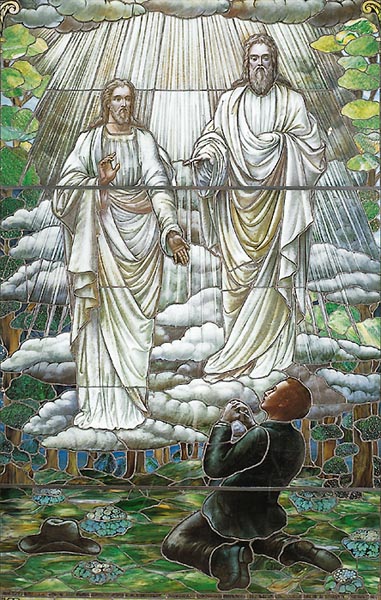
The Church of Jesus Christ of Latter-day Saints was established in 1830, shortly after The Book of Mormon: Another Testament of Jesus Christ was published. The church was “restored” by the prophet Joseph Smith. At 14, Joseph, born in Vermont but living in Palmyra, New York, claimed to have had a vision, in which God informed him of his mission to restore the true religion.

At 17, Joseph reported that an angel named Moroni directed him to a hidden manuscript preserved on golden plates and written in an unknown language. Smith’s translation narrates the story of how Middle Eastern exiles, associated with the so-called Ten Lost Tribes of Israel, came to America in 600 b.c.e., how the resurrected Jesus later had preached to these now native American tribes, and how one tribe of Christian converts, the Nephites, were reduced by wars to only Mormon and his son, Moroni.

Before their deaths, they buried this narration in 384 c.e., to be recovered in a “latter day” when their spiritual descendants would restore the true faith. Smith’s community, identifying itself as the restoration of this ancient faith (authentic Christianity), was forced by harassment to leave New York and move first to Kirtland, Ohio (1832), and then to Independence, Missouri (1838).


They eventually settled in Illinois on the Mississippi and built the city of Nauvoo, which would become in the early 1840s the largest city in the state. Smith, who began taking many other wives in addition to his first wife Emma Hale, advanced the general practice of polygamy as an ordinance of the church.

Despite his enormous popularity and prosperity, such that he was able to mount a viable candidacy for the U.S. presidency, Smith’s practice of polygamy led disillusioned ex-members to establish a newspaper designed to expose him as a fraud and suppress his political ambitions. Eventually, a riot led to the burning of the newspaper office, and Joseph and his brother, Hyrum, were arrested. While detained in a Carthage jail, a lynch mob murdered both men.

After Smith’s death, the church split. The largest group, following their new leader Brigham Young, migrated in 1847 to Salt Lake City, Utah. This group withdrew support for polygamy in 1890. The second group, now known as the Community of Christ (Reorganized Church of Jesus Christ of Latter Day Saints), followed Smith’s wife Emma back to its current home in Independence, Missouri. They rejected polygamy immediately and have attempted to maintain a theology closer to mainstream Christian thought.

The Book of Mormon, read by literary critics as an early American romance based on Bible stories, is for the Utah church merely the first of many revelations, which early on included Smith’s Doctrine and Covenants and The Pearl of Great Price.

The doctrines of progressive revelation (in which leaders are divinely inspired with teachings for a developing community) and progressive spirituality (in which believers are destined to become divine beings) form the framework of Mormon theology.

However, the most contentious point with critics is the secrecy of Mormon Temple practices. Clearly, church membership has not been hindered by such clandestine behavior. In 1947, the community reached the million mark and today it has risen to over 12 million. By the beginning of the 21st century, this aggressive missionary church could boast 200 million members worldwide.

John Henry Newman

John Henry Newman
John Henry Newman

John Henry Newman’s life can be divided neatly into two almost equal parts: as an Anglican from 1801 to 1845 and as a Roman Catholic from 1845 to 1890. Newman was born in London on February 21, 1801, to a conventional Anglican family, neither too high church nor too low church. Although it was a religious household, there was little to suggest the extraordinary career Newman would have in his later years.

In 1816 Newman entered Trinity College, Oxford. Thus began what would become almost three decades of educational, pastoral, and intellectual work in that celebrated university. In 1822 Newman won a fellowship to Oriel, at that time Oxford’s most prestigious college.

Becoming vicar of the University Church of St. Mary the Virgin in 1828, he began to attract a large following who came to listen to his sermons. Preached in a soft, melodious voice, Newman’s sermons appealed to Oxford students and High Street shopkeepers, to intellectuals and common folk. These would be collected in later years in the multivolume Plain and Parochial Sermons.


In Oriel’s senior common room, Newman came into contact with some of the men who would become the most important leaders of the Oxford Tractarian Movement, which was launched in 1833. The immediate catalyst for this religious movement (more commonly known as the Oxford Movement) was the coming to power of a new parliament in 1831.

With the threat of government interference in ecclesiastical affairs, coupled with a poorly educated clergy and lukewarm congregations, some Oxford intellectuals began to speak out in pulpit and on the printed page. The movement’s chief weapon was the published tract, hence the name for its proponents, Tractarians.

Meanwhile, Newman was touring Europe. Falling ill at sea in the summer of 1833, he penned the verses for which he is famous: Lead, Kindly Light. He hastened back to Oxford in time to hear John Keble preach a sermon On the National Apostasy, which for Newman was to signal the beginning of the Oxford Movement, a movement forever associated with the name of Newman. In all, 90 Tracts for the Times were published from 1833 to 1841, of which he wrote 29. It was his Tract 90 that provoked a storm of controversy and ended the series.

Newman’s association with such high church Anglicans as Keble and Edward Pusey was to shape his theological orientation. In his own words, it checked his drifting toward the liberalism of the day. Newman was against liberalism in religion, not in politics.

Liberalism was, to him, “the anti-dogmatic principle,” the principle that “there is no positive truth in religion, but one creed is as good as another, and all are to be tolerated since all are matters of opinion.” Newman’s first book, The Arians of the Fourth Century (1833), is notable for his insistence on the necessity of dogma.

Indeed, it was his study of early church history that provoked his own intellectual and spiritual crisis. What began as a study of the early church fathers, with a view toward justifying the Anglican via media (middle way) between Catholicism and Protestantism, was turning into, first, unease over the Anglican position, and then a positive doubt.

In the spring of 1839 the Oxford Movement was at its height, but Newman himself was on the verge of a change of heart. He penned the tract The State of Religious Parties, which would be (in his own words) “the last words which I ever spoke as an Anglican to Anglicans.”

This article ended with the rhetorical question: “Would you rather have your sons and daughters members of the Church of England or of the Church of Rome?” But from then on, until 1843, he “wished to benefit the Church of England, without prejudice to the Church of Rome.”

The year 1841 saw the publication of Tract 90, which argued that the Anglican 39 Articles could be interpreted in a Roman Catholic sense. The storm of indignation from many quarters that this tract produced eventually led to Newman’s resignation as head of the Oxford Movement. Preferring silence and withdrawal, Newman retired to the village of Littlemore, just outside Oxford, where he continued his reading and study.

By 1843 he made a formal retraction of his verbal polemics against the Roman Catholic Church and resigned the vicarship of St. Mary’s. For two more years, he quietly lived as an Anglican layman. He was received into the Roman Catholic Church in October 1845 by Dominic Barberi, an Italian passionist. He left Oxford for good the following year; it would be many years before he would see the old university again.

In 1846 Newman was in Rome to study, before his ordination to the Catholic priesthood the following year. Returning to England, he would spend most of the remainder of his life in the house of the Oratorians in Birmingham.

If Newman was a controversialist and outspoken theological adversary in his Anglican period, he was no less so as a Catholic priest. In 1850, for example, England was in a no popery period, which was a reaction to the restoration of the English Catholic hierarchy by Rome.

Awarded a papal doctorate of divinity for his Lectures on Certain Difficulties Felt by Anglicans in Submitting to the Catholic Church, he was henceforth to be called Dr. Newman until the time he was made cardinal.

Such writings, however, were not Newman’s lifework, although posterity remembers him chiefly for his writings. He preferred to live, until his death in 1890, the simple and obscure life of an Oratorian priest, engaged in liturgical, educational, and charitable activities. Nonetheless, he was an exceedingly effective writer, though only an occasional one.

Except for a few monumental, indeed astonishingly erudite, theological works that were far ahead of their time, such as An Essay on the Development of Christian Doctrine (1845), An Essay in Aid of a Grammar of Assent (1870), and The Idea of a University (published only in 1873), much of Newman’s literary output as a Catholic consisted of responses to those who either maligned or misunderstood him or Catholic teaching.

Thus, his Letter to Pusey (1866) was a defense of Catholic devotion to Mary, the Letter to the Duke of Norfolk (1875) was a carefully nuanced theology of papal infallibility (defined by the Vatican I Council in 1870), and most famously, his autobiographical Apologia Pro Vita Sua (1864) was a response to writer Charles Kingsley’s gratuitous and published attack on the Catholic clergy and Newman in particular. These works had the cumulative effect of establishing Newman as a first-rate intellectual and a modern-day Catholic apologist.

With such accomplishments, one would not have imagined Newman undergoing years of suspicion and setbacks from his Catholic superiors. In an article entitled “On Consulting the Faithful in Matters of Doctrine,” Newman had articulated his vision of a church in which laypeople actively participate even in doctrinal matters, since they have the spirit of truth in them.

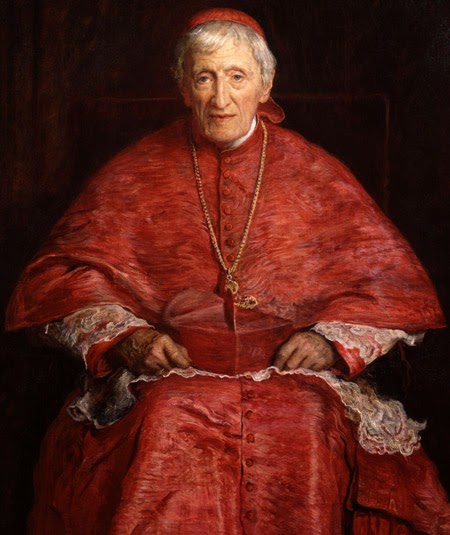
Such ideas (which the Second Vatican Council adopted in its teaching on the sensus fidelium, the “spiritual sense of the lay faithful”) were deemed dangerous and heretical. From 1859 onward, Newman was held in suspicion by prelates in Birmingham, London, and Rome. It was only in 1879, when he received the cardinal’s red hat, that he felt that the cloud was lifted from him forever.

Cardinal John Henry Newman died on August 11, 1890, and was buried in Rednal, eight miles out of Birmingham. One paper wrote: “No peer, or prince, or priest, or merchant who ever walked the crowded streets of Birmingham is so missed or mourned as the Roman Cardinal.”

Cardinal Henry Manning, preaching at the London Oratory, declared that “the history of our land will hereafter record the name of John Henry Newman among the greatest of our people, as a Confessor for the Faith.”

Newman’s enduring contributions are difficult to measure. In his Anglican period, he awakened the church to a clearer grasp of Christian doctrine and a more energetic practice of the faith. As a Catholic, he published timely apologias and seminal theological treatises remarkable for their scholarship, balance, and farsightedness. Throughout his long life he sought to live virtuously, honestly, and charitably.

A man of deep prayer and unassuming humility, he once wrote in his private journal: “Those who make comfort the great subject of their preaching seem to mistake the end of their ministry. Holiness is the great end. Comfort is a cordial, but no one drinks cordial from morning till night.” The cause for his heroic sanctity is presently being pursued with the Vatican’s Congregation for the Causes of Saints.

Papal Infallibility and Catholic Church Doctrine

Papal Infallibility and Catholic Church Doctrine

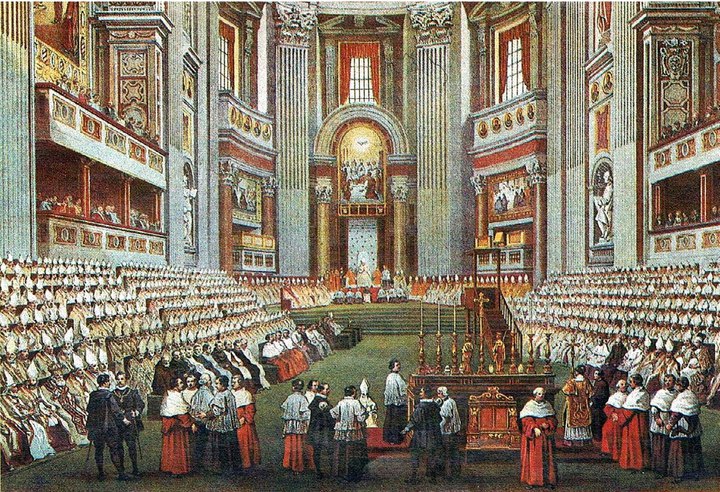
The dogma of papal infallibility was proclaimed at the Vatican I Council in 1870. The council fathers taught that when the pope speaks ex cathedra, that is, as pastor and teacher in an absolute final and irrevocable way concerning faith and morals, he receives the divine assistance that was promised to Peter, the leader of the Twelve Apostles and his successors, and, therefore, speaks infallibly.

Such proclamations are “irreformable” of their own nature and not dependent upon the church’s consent. As a dogma, papal infallibility is held to be divinely revealed and binding on all Catholics.

This theology was controversial at the time and has not been accepted by non-Catholic churches to this day. Opposition to such a definition was strong in Germany, Austria, and Switzerland throughout the 19th century whenever it was proposed for discussion, even among the Catholic bishops. Most of them, however, accepted the teaching and saw it as necessary for the unity of the church.


Upon its overwhelming approval in a vote at council on July 18, 1870, the vast majority of opposition among the council fathers ceased and they supported the dogma. Laity in those German-speaking states who could not accept the decision eventually broke away from Rome to form the Old Catholic Church, securing their own apostolic line of authority through orthodox bishops.

The Catholic Church teaches that support for papal infallibility may be found both in Scripture and in tradition. Primarily the church looks to Christ’s promise to Peter in Matthew 16:18: “Upon this Rock I will build my Church, and the gates of hell shall not prevail against it.” Peter’s successors, therefore, lay hold of the same promise.

It is not Peter’s faith of which Jesus speaks, but his official position, and, therefore, those who accept the same office are heirs of the promise. In other words, Peter’s authority to defy the gates of hell amounts to the doctrinal and ecclesiastical infallibility that the First Vatican Council recognized.

Tradition also indicates that early church fathers such as Clement and Irenaeus were in support of the primacy of Rome. St. Augustine once declared that Rome had replied on the matter “and now the case is closed.”

Similar sentiments are reflected in decisions made by the council fathers at Ephesus, Chalcedon, Constantinople 3 and 4, and later at Florence in 1445. Certain objections that Popes Liberius, Honorius, and Vigilius had made errors in their doctrinal statements have never been proven to the satisfaction of many scholars.

The Second Vatican Council further addressed the dogma in Lumen Gentium saying: “Although the individual bishops do not enjoy the prerogative of infallibility, they can nevertheless proclaim Christ’s doctrine infallibly.” They are required, however, to maintain unity with Peter’s successor.

That authority is manifest when they gather together in council. Traditionally, an infallible pronouncement only occurs in matters of faith and morals and usually when it is clearly understood that the majority of Catholics already agree with the papal position.

Such “infallible” pronouncements are not easily or frequently made and only after much prayer, reflection, consultation, and the believed prompting of the Holy Spirit. The most recent infallible statement was made by Pope Pius XII on November 1, 1950, declaring Mary’s assumption into heaven.

Pope Pius IX

Pope Pius IX
Pope Pius IX

Pope Pius IX was born Giovanni Maria Mastai-Ferretti at Sinigaglia on May 13, 1792, and died in Rome on February 7, 1878. As a young man, he desired to be a member of the papal noble guard, but was refused admission because he suffered from epilepsy. He instead studied for the priesthood and was ordained a priest in 1819 and archbishop of Spoleto in 1827. He was moved to the diocese of Imola and made a cardinal in 1840.

Mastai-Ferretti was elected pope on June 16, 1846. He had many domestic challenges in Italy that occupied his early papacy. King Victor Emmanuel II defeated the papal army in 1860 and 10 years later seized Rome and made it the capital city of a united Italy.


Problems with most of the nations of Europe compelled Pius IX to use diplomacy to fight against the expulsion of Catholic clergy and a general feeling of anti-Catholicism throughout the continent. His lifelong devotion to the Blessed Virgin Mary compelled him to circulate letters to the world’s bishops in regard to the subject of her immaculate conception.

On December 8, 1854, he promulgated the Marian dogma of the Immaculate Conception of the Blessed Virgin. He convoked the Vatican I Council, which declared the dogma of papal infallibility that establishes that the pope, when speaking on matters of faith and morals, is infallible in his teachings. At 32 years, his pontificate is the longest in history. He was beatified on September 3, 2000, by Pope John Paul II.

Salvation Army

Salvation Army
Salvation Army
In 1878 in London, England, William Booth and his wife, Catherine, became the founders of a Wesleyan- and Holiness-oriented organization, which they called the Salvation Army. William, a discontented Methodist minister and then an evangelist, envisioned “a cathedral of the open air.”

The couple had eight children, and all of them became major figures in this new organization, which developed a military structure and esprit de corps to serve better the spread of the Christian message and a welfare program based on the Gospels. William gave himself the title of “General,” which his wife and children were enjoined to use even at home. Catherine became known as the “Army Mother.” Converts and members were known as “Salvationists.”

Within a decade, and particularly after the 1890 publication of William’s book, In Darkest England and the Way Out, this new movement was well established not only in the British Isles but also throughout Europe, Canada, and Australia. Already, by 1880, the Salvation Army had “opened fire” on the United States, and one of the older children, Ballington, soon became the “Commander” of operations there.

The doctrine of sanctification, by which God’s grace and believers’s practical exercise of faith give rise to a host of virtues and a deep sense of love for humanity, is preeminent in the ideology of the Salvation Army, functioning as a guiding force in members’ lives.


While many other evangelical doctrines, including faith in the sacrificial atonement of Christ’s death, are of enormous importance for Salvationists, all mainstream Protestant sacraments and rituals were jettisoned as confusing and divisive, in order to streamline the Army’s evangelistic goals.

In addition to the Booths’s evangelistic fervor for lost souls, demanding of all Salvationists, both Officers and Soldiers, that they sign the Army’s Articles of War on unbelief and poverty, the Salvation Army has always advocated humane treatment of animals and supported women’s rights. With respect to the latter, William and Catherine insisted that all three of their married daughters hyphenate their last names, long before the practice became more common.

However, it is the charitable nature of the Salvation Army that is so widely known and appreciated. The American organization has created day-care centers, summer camps, residences for senior citizens, programs for the homeless, rehabilitation centers for alcoholics and drug addicts, and relief collections, for which the red kettles and the ringing bells have become ubiquitous during the Christmas season.

The most vibrant mark on the American consciousness was made by the seventh of the Booth’s children, Evangeline. With a strong will and a penchant for flamboyance, this remarkable administrator served as the U.S. commander from 1904 to 1934, bringing relief to many during World War I and the Great Depression. Of special note were her campaigns on behalf of unwed mothers and neglected children, acknowledged by the government and the public alike.

Due to her work, today there are well over 1,000 Corps (local churches) in America, many of which conduct evangelical services distinguished by exuberant brass band hymn singing. Before retiring in the United States, now boasting the largest organization and membership in the world, Evangeline returned to London in 1934 and for five years assumed duties as the fourth general of the Salvation Army.

Ultramontanism

Ultramontanism
Ultramontanism

Ultramontanism literally means “over the mountains,” and it implies that there are two views of how the Catholic Church should be governed. One view sees leadership as a centralized and unified papacy (in Rome, over the Alps from the rest of Europe) and the other looks for local control and a national church (the church of France or Germany or any other country). Ultramontanism is the former view; Gallicanism is the latter.

For centuries, theologians had speculated on the position and authority of the Roman papacy, and often the pope was seen as the center and coordinator of the whole church. The urgency of these thoughts became apparent as the Protestant reformation began and challenged church unity.

The first phase of ultramontanism is often called Romanism. It was promulgated by the forces of the Counter-Reformation and later championed by Robert Bellarmine. The bishops of the Council of Trent swallowed their objections to the claims of the papacy if only to stem the tide of Protestant defections among their flocks. Ironically, Trent reformed the Catholic Church by depositing even greater powers in the pope.


Momentum returned to the Catholic Church as a result of Romanist ultramontanism. All countries adopted it at least externally, even the actively independent regions of France and Germany. The Jesuit order served Romanism well, with its worldwide efforts to propagate the Catholic faith now held together by a focus on the pope.

Some of its characteristics include a strong hierarchy; a restriction of access to foundational texts like the Bible, the liturgy, and even theological texts; a folk piety that celebrated feasts, the “Sacred Heart,” and Marian devotions; and an expansionistic faith opposed to toleration of sects and supportive of conversions.

As time went on, the Romanists lost ground to the Gallicanism, as promoted by the likes of Louis XIV of France. At this time the word ultramontanism came into parlance, as national church identities revived and the enthusiasm of the Protestants waned. All this changed with the French Revolution, when the monarchy and its Gallican agents were deposed.

Again, the need for a strong papacy was felt, giving birth to the next phase called neo-ultramontanism. Many Catholics believed that the French Revolution’s anticlericalism and godless ideology were a direct result of the Protestant reformation as intensified later by the Enlightenment. This phase witnessed at times flirtation with liberal ideals of democracy among the laity, but with the revolutions of 1848, ultramontanism became soundly autocratic in its support of the papacy.

Pope Pius IX led the Catholic Church into the first Vatican I Council and rejected not only Gallicanism but all forms of liberal Catholicism. Among the ultramontanist positions it adopted were an emphasis on the juridical role of the pope over his supernatural role, more emotional devotions toward such things as the Blessed Sacrament and the Virgin Mary, a focus on Marian apparitions and pilgrimages, and attention on the centralized and authoritative church under the pope.

Between Vatican I and Vatican II, ultramontanism was effectively synonymous with orthodox Catholicism. Today the victory is so complete that the term has largely fallen out of usage.

War of the Pacific (1877 - 1883)

War of the Pacific (1877 - 1883)

Sparked by conflicts over control of the rich nitrate fields in the Atacama Desert along South America’s Pacific coast, the War of the Pacific proved a national humiliation for the allies Peru and Bolivia and a national triumph for Chile. With its decisive victory, Chile wrested from Bolivia Antofagasta, its only access to the sea, thus rendering the country landlocked and shearing off Peru’s southernmost province of Tarapacá.

The strip of land conquered by Chile was loaded not with one but two vital natural resources, nitrates and copper, that later proved crucial in the development of the Chilean national economy. The war caused lasting resentment against Chile by its two defeated neighbors that endures to this day.

It also sparked a popular uprising in the Peruvian highlands that exposed the weak sense of national belonging among Peru’s highland Indian, black, and Chinese populations, and that for a time threatened to fragment Peru into warring regions.


Some scholars maintain that the ideology espoused by the highland rebels was itself explicitly nationalist, spearhead of a nationalist project directly at odds with the elitist nationalist discourse emanating from the capital, Lima.

This was just as the Peruvian national state and the Lima-based commercial elite were experiencing a deep fiscal crisis in consequence of the depletion of Peru’s guano reserves following the age of guano.

The war’s short-term trigger was Bolivia’s 1878 imposition of higher taxes on Chilean nitrate operations in the Bolivian province of Antofagasta, contrary to an earlier agreement between the two countries. Chile balked, tensions escalated, and soon Peru was drawn into the conflict in consequence of its secret mutual defense treaty with Bolivia.

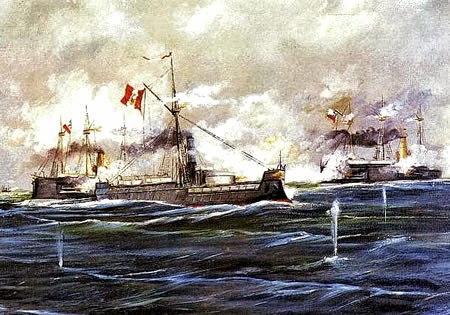
Hostilities commenced in April 1879 with a series of sea battles that raged along the Pacific coast. In the 1870s both nations had recently built formidable modern navies, though Chile’s proved far superior, destroying Peru’s in six months.

The decisive encounter was the Battle of Angamos of October 8, 1879, in which the Chileans captured the Peruvian battleship Huascar and killed its able commander, Miguel Grau. With its control of the sea secure, and with Bolivia knocked out of the picture, Chile launched a land invasion of Peru.

Following its January 1881 victories in the Battles of San Juan and Miraflores, the Chilean army occupied Lima and ousted the dictatorship backed by the Peruvian caudillo Nicolás de Piérola, installing a government headed by Francisco García Calderón.


For nearly three years following Chile’s capture of Lima, the Peruvian General Andrés Cáceres led an armed resistance to Chilean occupation in the central and southern Peruvian highlands, backed by an insurgent army of Indian, black, and Chinese workers and peasants, the montoneras.

Soon the army nominally headed by Cáceres fractured, as the montoneras and other groups pressed their own agendas that had less to do with ousting the Chilean occupiers than with overturning longstanding relations of power and privilege in the highlands, especially with regard to the region’s highly unequal patterns of landownership and labor relations.

Drawing on social memories of highland resistance during the Great Civil War a century earlier, the rebels kept up their resistance even after the war’s formal end in the Treaty of Ancón of October 1883.

Scholarly debates continue regarding the nature of this resistance movement, particularly its social composition, geographic extent, and the motivations of its participants in various regions, as expressed in both their written texts and collective actions.

The montonera movement highlights a broader pattern in Latin American history, in which fights among dominant groups lead to sustained challenges to existing social relations by those from below.

Watch Tower Society

Watch Tower Society
Watch Tower Society
Charles Taze Russell founded the Watch Tower Bible and Tract Society in 1884. This society brought together many Bible study groups that he had established throughout Pennsylvania over more than a decade. Russell rejected many traditional and mainstream Christian doctrines. However, his most radical teaching had to do with eschatology (doctrines about the Second Coming of Christ, the Battle of Armageddon, and the establishment of the Kingdom of God).

Russell claimed that the Bible contained a secret code revealing the dates (1874 and 1914) for what he famously phrased “the end of the world as we know it.” Given the obvious lack of visible evidence, Russell came to believe that Christ had returned in only a spiritual sense in 1874 and that the final conflict between the forces of God and those of Satan was merely set in motion in 1914.

At the conclusion of these protracted events, sometime in the very near future, insisted Russell and his society, God would unleash a mass genocide on all unbelievers and reward the faithful with eternal life.


After Russell’s death and several schisms, the primary group, now calling themselves Jehovah’s Witnesses, under the leadership of Joseph Rutherford, became focused on missionary activity, organizing what was rapidly becoming a world community. Successive leaders developed a publishing empire primarily to produce translations of the Bible and literature supportive of their controversial theology.

Jehovah’s Witnesses are often recognized today for their unconventional beliefs and anticultural behaviors, some of which have led to important legal cases and resulted in Supreme Court decisions that have substantially enhanced America’s religious freedoms.

Jehovah’s Witnesses forbid their members to engage in the celebration of Christian and civic holidays (except for the Memorial of Christ’s Death), which they believe originated in pagan rituals. They accept baptism and the Lord’s Supper as sacraments, but the latter is reserved for the “Anointed Class” (144,000 elite believers), while the “Great Crowd,” or current general membership, may observe this oncea-year Passover-style meal.

But it is their unwillingness to join the armed forces, to salute the flag, recite the Pledge of Allegiance, run for public office, vote in public elections, or accept blood transfusions, vaccinations, and organ transplants that have led to their legal problems and occasional persecutions, the most vicious of which were conducted by the Nazis in the 1940s, when thousands of Witnesses died in concentration camps.

Holding a strict monotheism, they deny the existence of the Trinity, believing Jehovah to be the Supreme Being. Christ is viewed as God’s first created spiritual being and is legitimately called God’s Son even though he is not divine. Christ was incarnated in Jesus as a sinless man and invisibly resurrected and enthroned by God as a king over heaven and Earth.

The Holy Ghost is simply a biblical term describing God’s method of work in the world and not a separate entity. Jehovah’s Witnesses also deny the immortality of the soul and the existence of hell as a place of punishment. For them the death of unbelievers is merely the annihilation of human consciousness.