Showing posts with label south east asia. Show all posts

Anglo-French Agreement on Siam (1897)

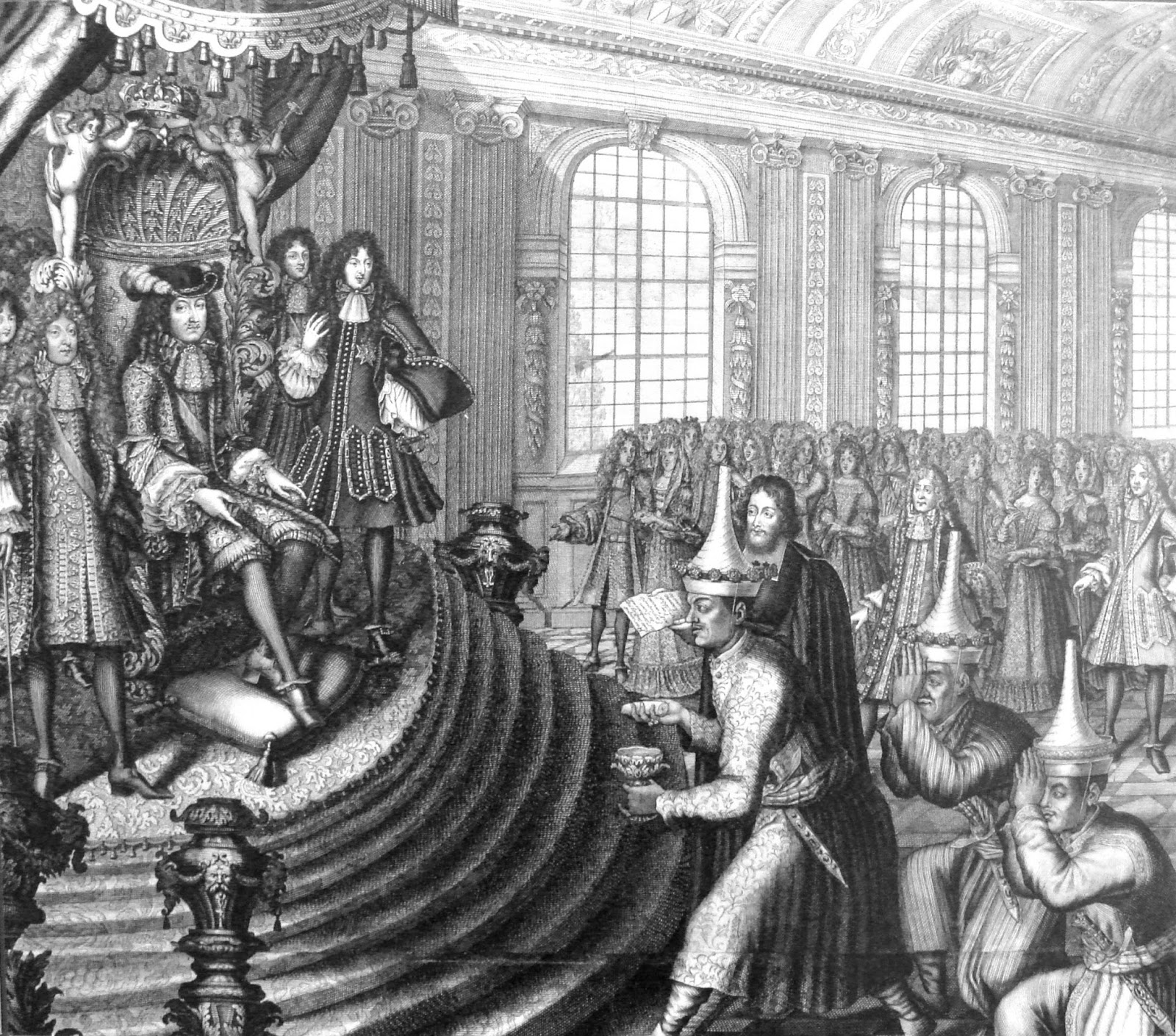
Second Thai embassy to France

The Anglo-French agreement concerning Siam (later Thailand) was the result of British and French imperialism in Southeast Asia in the 19th century. The British and French were expanding their influence into Burma and Indochina respectively and used Siam as a buffer state between the two expanding empires.

Siam was able to use this agreement to ensure some degree of autonomy, as European imperialism was increasing in Asia and Africa in the late 19th and early 20th centuries. The conclusion of the Anglo-French agreement marked an important event in European relations with Siam that had extended as far back as the 16th century.

In the 16th century Portugal began attempting to extend trading relations into Southeast Asia. British, Dutch, and French merchants were also interested in the riches of Southeast Asia and sent in merchant fleets in the 17th century.


The British East India Company was concerned with acquiring posts in Southeast Asia in order to expand trade with this region. In 1786 the East India Company negotiated an agreement with the Sultan of Kedah that allowed it to occupy Penang. In order to acquire control over Penang, the East India Company had to assure the sultan that it would defend him against hostility from Selangor.

In 1826 Captain Henry Burney concluded with the Siam government another agreement that opened up Southeast Asia to greater British influence, as this agreement prevented the Siamese government from disrupting British trade in the Trengganu and Kelantan regions.

The Siamese court negotiated an agreement with the British in 1855, which allowed British subjects to enjoy extraterritorial rights in Siam, allowed a British consul to take up residence in the country, and fixed tariff rates.

At the same time, France was also seeking to expand its influence in Southeast Asia. In 1862 the French government cited the maltreatment of French missionaries in Vietnam as an excuse to take control of the southern region of the country.

This region was important to the French because it exported rice and could produce rubber. In 1867 France sent a naval squadron that forced Siam to relinquish its control over Cambodia, allowing the French to assert their influence over the region.

In 1884 France went to war with China over Vietnam, although Vietnamese guerrillas continued to create instability in the region. Britain became concerned that a conflict between the Siamese and French governments would give the French an excuse to occupy the region.

During the 1890s the British government also became concerned about Germany and France acquiring influence over the Malay Peninsula. Joseph Chamberlain, British colonial secretary, stated in a letter in 1895 that it would be in the best interests of the British Empire to acquire a sphere of influence in the region between the Malay States and Tenasserim in return for recognition of a French sphere of influence in northern Siam.

The result was the Anglo-French agreement, an attempt by the British and French governments to transform Siam into a buffer zone between their two empires to lessen tensions in Southeast Asia.

Lord Robert Cecil, the British prime minister, dispatched a message to the British ambassador to France assuring him that the agreement would not result in the end of an independent Siam.

The government of Siam responded by appointing Westerners to government positions and reforming the Ministry of Finance. The Siamese government attempted to learn technology in an attempt to improve its international position.

Following the signing of the Anglo-French agreement, the British and Siamese governments negotiated an accord in 1897. It required the Siamese government to gain permission of the British government before it could grant concessions to a third country.

This new agreement strengthened the British position on the Malay Peninsula. The Anglo-French agreement, however, failed to end tensions in Southeast Asia caused by imperial rivalry between Britain and France.

Burmese Wars, First, Second, and Third

Burmese Wars
Burmese Wars

The three Burmese Wars were the result of frictions between the British East India Company, which ruled a growing British dominion in India, and the kingdom of Burma, or Ava. The First Burmese War was fought from 1824 to 1826 over long-standing frontier disputes that the East India Company inherited from the Mughal dynasty of India.

At the same time that the British East India Company was expanding in India, Burma had regained unity as the kingdom of Ava in 1752. The first king of a reunified Burma is considered to be Alaungpaya, who reigned from 1752 to 1760. Even before Alaungpaya had reunited Burma, there had been friction between the British and the kingdom of Pegu.

In the 1730s the British established a diplomatic resident in Syriam in Pegu to help its trade and gain access to valuable timber. But in 1743 internal unrest caused Syriam to be sacked, and the British representative returned to India. The reign of King Bagyidaw began in 1819. He annexed Assam in 1819 and went on to claim Manipur in 1822.


Faced by the Burmese invasion, the local rulers preferred protection under the British East India Company and sought its help. The Burmese struck first on September 23, 1823. In March 1824 the East India Company declared war on Burma and the governor-general Amherst executed a three-pronged assault on the kingdom of Ava. During the British invasion, some Karens, a Burmese ethnic group, actively supported the British, serving as guides.

By 1825 British forces had captured the ancient city of Pagan and the king decided to make peace with the British. The war ended with the Treaty of Yandabo in February 1826 that ended the First Burmese War, with Britain gaining valuable coast territory in southern Burma.

Peace between the East India Company and the kingdom of Ava lasted until 1852 when Governor General Dalhousie, wishing to gain complete control of the sea lanes between India and Singapore, sent an ultimatum to King Pagan Min of Ava, threatening that hostilities would begin unless the company’s demands were met by the Burmese within one month.

The demands made by the British stemmed from the Treaty of Yandabo. While the Burmese were quick to appease the British, England found enough reason to attack. Facing no real opposition, Dalhousie’s forces annexed the main towns of southern Burma. With the end of the Second Burmese War, the British were masters of southern Burma.

Pagan Min died in February 1853, succeeded by Mindon Min. The British, unsure of the determination of the new king to fight and reluctant to be drawn deeper into fighting in the jungles of Burma, were content with the gains they had already made.

Mindon Min proved to be an astute diplomat in the competition for empire between France and Britain in Southeast Asia. In 1878, Mindon Min was succeeded on the throne by Thibaw Min, who continued to play off the French against the British. Thibaw Min, however, lacked the diplomatic skill of his predecessor and eventually ended up in war against the British.

In 1885 the Third Burmese War began when a British force numbering 9,000, with 2,800 local levies under the command of General H. N. D. Prendergast, attacked the Burmese capital at Mandalay. The official reason for the war dated back to 1878 when King Thibaw came to the throne and sought to erode British influence.

In early 1885 he insisted that British representatives remove their shoes when entering his palace. With rising tensions, Thibaw began to support tribesmen in Lower Burma who were opposed to British rule.

The true reason for the war was more likely that the British were worried about increasing French influence in the region—the French foreign minister Jules Ferry having begun meetings with a Burmese delegation. This coincided with a French consul taking up residence in Mandalay, although he was withdrawn for “health reasons” by the French in a diplomatic retreat soon afterward.

On October 22, 1885, the British issued an ultimatum to Thibaw demanding that the Burmese accept a British resident in Mandalay and that the British control all foreign relations of the kingdom, thereby making it a protectorate.

There were also minor issues such as the matter of a fine imposed on the Bombay Burmah Trading Company because the company had underreported its logging of teak and had been underpaying its local staff.

Another influence was undoubtedly British interest in the oil deposits there. On November 9 the Burmese refused to consider the British demands, and war became inevitable, with the British mustering their forces at Thayetmo.

The British advanced up the Irrawaddy River from Thayetmo on November 14. They used flat-bottomed boats manned by the Royal Navy, taking with them 24 machine guns and many ships containing supplies and ammunition. The British land forces took control of the redoubt at Minhla, where the Burmese put up some resistance on November 17.

On November 26, with the flotilla close to Mandalay, envoys from Thibaw met with General Sir Harry Prendergast and offered to surrender. The British reached Ava on the following day and accepted the Burmese surrender.

On November 28, the British started sacking Mandalay, and then a number of them were sent to Bhamo, which they reached on December 28. The war ended with the British annexation of Burma on January 1, 1886. The war was conducted with little loss of life to the British and was a further example, after the Anglo-Zulu War, of what became known as the British Forward policy.

The governor-general had been replaced by a viceroy, who ruled India directly in the name of Queen Victoria, who by now was the queen-empress. At the time of the Third Burmese War, Viceroy Frederick HamiltonTemple-Blackwood (later, first marquis of Dufferin and Ava) was able to martial Crown forces that Thibaw could not match.

As expected Thibaw refused the British ultimatum. After an astonishing attack, Thibaw finally told his men to lay down their weapons and acknowledged British victory.

Mandalay fell, and King Thibaw was imprisoned, although his rank as king would have been respected. After Mandalay was captured, the British went on to capture Bhamo on December 28, 1885. The British wanted to overawe the Burmese and thwart any Chinese move into Burma.

On January 1, 1886, the rump state of Thibaw’s Kingdom of Ava, or Upper Burma, was also annexed to British India. The final act took place when Upper and Lower Burma were united as Burma and placed firmly within the British Raj, or Indian empire.

Sir Frederick Roberts, the hero of the Second Afghan War, completed the pacification of Burma, using Indian cavalry regiments and locally raised troops to subdue remaining pockets of Burmese resistance, although guerrilla warfare would last until at least 1890.

Chakri Dynasty and King Rama I

King Rama I
King Rama I
The Chakri dynasty was established on April 6, 1782, when Chao Phaya Chakri was crowned the king of Thailand (formerly Siam) as Rama I. The rulers belonging to the house of Chakri have been kings of Thailand ever since. The illustrious rulers of this dynasty took the country out of troubled times during the colonial period. Their vision and leadership also modernized Thailand.

Rama I was born on March 20, 1737, to a noble of the Ayudhya kingdom, Phra Aksorn Sundara Smiantra. After finishing his education in Buddhist temples, he served in the royal household of the Ayudya kings before joining the army. Phya Thaksin, Rama I’s predecessor, had liberated Thailand after the Burmese devastation of Ayudhya in 1767.

Rama I was in his service, participating in almost every battle fought by the king and was made governor of Ratchaburi Province. He was awarded the title Somdetch Chao Phraya Maha Kashatriya Suk (roughly equivalent to a duke) by Thaksin.

The Burmese attack had been repelled, and Cambodia and Luang Prabang were under Thai authority. The task of subjugating Vientiane was entrusted to Rama I, then an army general. He successfully completed his mission in 1778.


The famous Emerald Buddha, in Vientiane’s possession since 1564, was brought to the capital, Thonburi. The hostility of Buddhist monks against Thaksin’s demand of obeisance led to his downfall and imprisonment.

Once again, it seemed that the newly established peace and order of the kingdom would collapse in a civil war. Rama I rose to the occasion. He returned from Cambodia, where he was stationed for a military campaign, and assumed the royal title after restoring order.

Rama I shifted the capital from Thonburi to a site opposite on the bank of the river Chao Phraya. He planned the layout for a new city of Bangkok. It has remained the capital of Thailand ever since. On the eastern side of the river, he implemented a strong defense with double-lined fortification. Thonburi had been on both banks of the river to protect against Burmese attack.

The famous Emerald Buddha temple

Rama I did not have any plan to make an escape and concentrated on checking any future attack on the capital. A large Chinese community lived on the eastern side, so they were transferred a short distance downstream to Sampheng. It is now a famous Chinese shopping area. Within three years, the Grand Palace was constructed, and it still stands today.

In keeping with earlier Thai monarchs, Rama I retained connections with Indic-style Sanskritized epithets that resulted in descriptions of the new city such as Impregnable City of God Indra, Grand Capital of the World, and City given by Indra and Built by Vishnukarma. The Emerald Buddha was installed in Wat Phra Kaew.

The reign of Rama I witnessed consolidation and expansion of the kingdom by extensive warfare. The Burmese attacks of King Bodawpaya were successfully defeated in 1785 and 1787. The kingdom of Vientiane of Laos acknowledged the vassalage of Thailand.

Chieng Mai and Chieng Saen were once again under Thailand’s authority. Chao In of Luang Prabang remained as a vassal of Rama I. Thus Thai control extended into Laos.

In 1795 Rama I installed Anh Eng as ruler of Cambodia after annexing the provinces of Battambng, Siemreap, and portions of Korat. When the powerful Gia Long unified Vietnam, Cambodia had to acknowledge suzerainty of both Thailand and Vietnam. The sultans of Kedah, Kelantan, and Trenggannu acknowledged the suzerainty of the Thai monarch until the British took over the sultanates in 1909.

Rama I revamped administration in the provinces as well as the capital, making his rule very centralized. The incessant Burmese invasions of the 18th century had made both the Thai bureaucracy and monkhood corrupt and lax. Between 1784 and 1801 Rama I restored the moral standard of the Buddhist monks by a series of royal decrees.

The Buddhist scripture, the Tripitaka (three baskets), and Thai civil law had been destroyed at the time of the Burmese sack of the earlier capital Ayudhya.

Rama I called a Buddhist council in 1788, in which 250 monks and Buddhist scholars participated, to reconstruct the Tripitaka. The Thai king was the defender of Theravada Buddhism and the pillar of Thai governance and society, and Rama I performed his obligation to the fullest extent.

Rama I also appointed a supreme patriarch of Thai Buddhism. Further, he appointed a commission in 1795 consisting of 11 jurists and scholars to look into the laws promulgated by Rama Tibodi I (founder of Ayudhya dynasty), who reigned in the 14th century.

The code of laws comprising indigenous practices and Indian legal concepts was somewhat altered. The new code of 1804, known as Laws of the Three Seals, categorized the 48 provinces of the kingdom, each with a governor, most of whom were members of the royalty and served three year terms.

The code also enumerated provisions for civil and military administration. According to Thai sources, Rama I was a benevolent ruler who looked after the needs of his subjects, these codes being a primary example of his benevolence.

There was a flourishing of Thai literature and translations under Rama I. He had initiated the royal writings known as Phra Rajanibondh, and he wrote the Thai version of the Indian epic, the Ramayana, which depicted the feats of a hero named Rama.

Rama I died on September 7, 1809, in Bangkok and was succeeded by his son, Prince Isarasundorn, as King Rama II. He left a legacy in Thai history as a patron of literature, a lawmaker, and a builder of empire.

French Indochina

French Indochina
French Indochina

The French had interests in what was to become Indochina as far back as 1787 when the Treaty of Versailles was signed between Nguyen Anh, the pretender to the Vietnamese throne, and France.

It allowed for Pigneau de Behaine, the French bishop of Adran, to support Nguyen Anh, who was trying to take over Vietnam, in return for Nguyen Anh’s promising to give the French a privileged trading status should he come to power.

He also granted commercial and missionary rights to the French, as well as control over the central Vietnamese city of Danang and the island of Poulo Condore off the southern coast of Vietnam.


With the French Revolution taking place in 1789, the French were unable to fulfill their commitments. However, in 1802 the forces of Nguyen Anh won control of Vietnam and centralized power around the imperial city of Hue in central Vietnam.

Five years after Nguyen Anh’s victory, the Vietnamese expanded their lands by establishing a protectorate over Cambodia. However, the king of Cambodia, Ang Duong, was keen on Cambodia becoming independent of its two more powerful neighbors, Thailand to the west and Vietnam to the east, and sought help from the British in Singapore.

When that failed, he enlisted the help of the French. In 1863 the French established a protectorate over Cambodia. The French had also been active in southern Vietnam and, after the Battle of Ky Hoa near Saigon (modern-day Ho Chi Minh City), the Treaty of Saigon in 1862 resulted in the Vietnamese ceding three provinces in southern Vietnam to France.

french colonization of vietnam

The remaining provinces of southern Vietnam were conquered by the French in 1867. By the end of the French Second Empire in 1870, the French were in control of southern Vietnam and all of Cambodia. The Philaster Treaty of 1874 confirmed French sovereignty over the whole of Cochin China.

The French then decided to expand their control over the rest of Vietnam. In 1882 a French army captain Henri Rivière decided to attack Hanoi. He managed to storm the citadel of Hanoi but was killed the following year.

However, this did not stop French advances, and the Harmand Treaty of 1883 established a French protectorate over both northern Vietnam, known as Tonkin, and central Vietnam, known as Annam. This was confirmed in the Patenôtre Treaty of 1884.

Three years later, in 1887, the Indochinese Union was established over Vietnam and Cambodia, with Laos joining in 1893. From November 16, 1887, when the Indochinese Union was established, the French ruled through a governor-general based in Saigon, capital of Cochin China.


There were residents in Laos and Cambodia, a resident-superior in Annam, and a resident-superior in Tonkin, who ruled with the support of the regent, and took instructions from the resident-superior in Annam.

The Vietnamese imperial family continued to live in the imperial palace at Hue, but they were quickly deprived of any power. In July 1885 the French demanded that Emperor Ton That Thuyet resign or be deposed and when the Emperor refused to countenance this, the French, in a show of force, surrounded the imperial palace with over 1,000 soldiers, and the French commander, General Roussel de Courcy, demanded an audience with the emperor.

Ton That Thuyet overestimated his own strength and sent out soldiers to attack the French. These were easily repulsed, and the French invaded the imperial palace, which they sacked. As well as looting it, the French also destroyed the imperial library, where scrolls and documents dating back to medieval times were burned.

French ship in Tonkin

Save the Emperor

In July 1885 the new emperor, Ham Nghi, issued an appeal called Can Vuong (“Save the Emperor”) urging the wealthy to give their money, the strong their might, and the poor their bodies to defend Vietnam from the French.

Three days later the emperor fled from Hue with Ton That Thuyet and some close advisers. From their jungle stronghold in what is now Laos, Ham Nghi’s supporters formed the Can Vuong movement.

The French responded in September 1885 by deposing the emperor and replacing him with his brother Dong Khanh. Ham Nghi was eventually captured in November 1888 after being betrayed by Hmong mountaineers, and Ton That Thuyet escaped to China.

The French executed all members of the Can Vuong movement whom they captured, except Ham Nghi, who was sent into exile in French Algeria, where he remained until his death in Algiers on January 4, 1943.

In Cambodia, King Norodom I, who had accepted the French but then became nervous about having given them too much power, died in 1904 and was replaced by his brother King Sisowath, who was more pro-French. In Laos, there was a token French presence, with the French residents-superior working alongside King Sakkarin and, after his death in 1904, King Sisavang Vong.

French rule barely affected many of the peasants in the countryside throughout Indochina, whose main interactions with the French were taxation. However, gradually, many peasants were encouraged to work in plantations, which the French established throughout Vietnam and in eastern Cambodia. These centered on the rubber industry and other cash crops.

Plantation life was hard but promised, initially at any rate, guaranteed supplies of food, particularly important as Vietnam did experience a number of famines. Gradually, these plantation companies and mining companies came to dominate the export economy of Indochina, with the emergence of business enterprises such as the Companie du Cambodge.

The major impact of the French was in the cities, especially Saigon. Prior to the establishment of French rule, Saigon had been a small port. Under the French it rose to be an important trading hub, joining up with the nearby Chinese area, Cholon, to form what was to become Saigon-Cholon.

The French built sections of what is now central Ho Chi Minh City, with the center of French society being in rue Catinat, where French rubber planters and their families would meet with colonial officials, businessmen, and wealthy Chinese and Vietnamese entrepreneurs and middlemen.

In Hue, the north bank of the city was dominated by the imperial palace, so the French established their city on the opposite side of the Pearl River. In Hanoi, the French enlarged the city, with their quarter to the south of the citadel and the old city. Similarly, in Phnom Penh, Cambodia, and in Vientiane and Luang Prabang, in Laos, the French added their own quarters.

Colonial Education

In terms of education, the French provision of education in Cochin China was adequate, at least when compared to other colonial powers, but apart from an institute for tropical medicine in Hanoi, its contribution to the education of the people of Indochina was woeful.

By 1945, there were only two high schools in the whole of Cambodia; in Laos, European-style education was nonexistent. Many boys from the Cambodian and Laotian elites attended Lycée Chasseloup-Laubat in Saigon.

Some wealthy Vietnamese and scholarship winners studied in France, along with a handful of Cambodians. Western-style medical care was only available in major cities and largely restricted to the small European populations and the local wealthy elite.

There were protests against French colonial rule. Initially these were largely revolts by people loyal to the rulers, such as that of Ham Nghi in 1885, or the Poukombo and Si Votha uprisings in Cambodia, the first led by a monk who claimed to be from the Cambodian royal family and the latter led by a brother of the king of Cambodia.

Together with an earlier rebellion by another monk, Assoa, who also claimed royal heritage, they show a distinct theme of rebels having or claiming to be members of the royal family, with some peasants keen to follow them as royal pretenders, viewing them as the only way they could envisage an end to French rule. None of these rebellions was successful.

There had been limited political freedoms in Cochin China, and by the first part of the 20th century there were a range of legal political parties. Most of the modern nationalist ideas in Vietnam come from the intellectual Phan Boi Chau, who founded the Vietnamese Restoration Society in 1912.

As well as political turmoil, there were occasions of farce such as when French adventurer Marie Mayréna proclaimed himself King Marie I of Sedang, issuing medals and postage stamps to support his claim of a kingdom in the highlands of Vietnam.

He eventually settled on the Malayan island of Tioman, where he died soon afterward. Certainly he also drew the focus of world attention on French Indochina during the 1880s and early 1890s.

Treaty of Federation and the Malay States (1895)

Treaty of Federation and the Malay States (1895)

The first British base in Southeast Asia was Bencoolen (now Bengkulu) in Sumatra in 1685, and this was followed by Penang Island, off the west coast of the Malay Peninsula in 1786 (this grew to include part of the nearby coastline in 1800).

Both were established by the English East India Company. During the Napoleonic Wars, Britain also conquered the Netherlands East Indies, but it was returned to the Dutch in 1815 at the end of the war. In 1819, the British also purchased Singapore at the southern tip of Malaya.

This gave the British the ports of Penang, Malacca, and Singapore, through which went much of the commerce from the Malay Peninsula. Exports of pepper and gambier (used in the treatment of leather), rice, coconuts, and spices ensured the prosperity of the region.


The Malay Peninsula consisted of a number of sultanates, most of which entered into treaties with the British authorities. Initially, the northern ones had been subjects of the King of Siam (Thailand), but the larger southern states of Johore, Pahang, Perak, and Selangor, as well as many minor states such as Jelebu and Sungei Ujong all signed treaties with the British.

In the late 19th century tin was found in Malaya, especially in Perak. In addition, the successful introduction of the rubber plantation made it extremely wealthy. The growth in the economy led to a massive influx of Chinese, which later created political problems for the indigenous Malay rulers. The British Colonial Office gradually moved the whole of Malaya under British rule.

Britain proposed the creation of the Federated Malay States (F.M.S.), with its capital at Kuala Lumpur (in Selangor), to consist of Pahang, Perak, Selangor, and nine small states. Johore retained seperate privileges and did not join the F.M.S. The northern states of Kedah, Kelantan, Perlis, and Trengganu did not join and were called the Unfederated Malay States.

Treaty of Federation

Many British civil servants who had worked in the Malay States favored a federation to standardize the rules between the states and to allow greater efficiency in administration and in business.

In July 1895 the Federation Treaty was signed by the sultans of Pahang, Perak, Selangor, and Negri Sembilan, and the Federation of the Malay States of Perak, Selangor, Negri Sembilan and Pahang formally came into existence.

The Federation Treaty consisted of six articles. The first confirmed all previous treaties between the British and the Malay sultans who had “severally placed themselves and their States under the protection of the British Government.”

In other articles, the states agreed that they were entering into a federation “to be known as the Protected Malay States to be administered under the advice of the British Government,” and restricted the authority of each ruler to his own state and to acceptance of British authority.

The rulers also accepted the advice of the residents-general on all matters of administration except those relating to Islam. Another article mandated economic and military cooperation between the states.

This new agreement established the position of resident-general, who was responsible to the governor of the Straits Settlements (Malacca, Singapore, and Penang), based in Singapore.

The Federation Treaty also allowed for the establishment of the Malayan civil service, with members serving throughout the Malay Peninsula (including the Unfederated Malay States and the Straits Settlements). It also helped with the coordination of communications through unified railway and postal services.

Natural Extension

For most of its existence the F.M.S. was extremely successful. The first resident-general was Frank Swettenham. A conference of rulers was held in 1897, and it was agreed that future conferences would take place on a regular basis.

Swettenham remained in office until 1901. During World War I, the F.M.S. took an active part in the war effort with hundreds of Britons from Malaya enlisting, along with some Malays who served in Aden. Rubber and tin production also helped the British war effort.

In post–World War I decades, prosperity came from rubber, tin, palm oil, coconuts, and fruit exports. Many towns built civic amenities like swimming pools, dance halls, cinemas, private schools, and clubs. With the depression starting in 1929, the price of rubber fell as demand crashed. A number of plantation businesses collapsed and managers lost their jobs.

The F.M.S. continued until the Japanese invasion of December 1941. The British, unable to hold back the Japanese, were forced to withdraw to Singapore where they surrendered on February 15, 1942. In response to a Thai request, the Unfederated Malay States became part of Thailand, with the other states and the Straits Settlements run by the Japanese for the duration of World War II.

During the Japanese occupation, the British government drew up the Malayan Union plan which would formally end the F.M.S. once the Japanese were defeated. It envisaged the uniting of the F.M.S., the Unfederated Malay States, Johore, and the Straits Settlements into one political entity.

When the British returned in December 1945, they put extreme pressure on the Malay Sultans to sign the Malayan Union Treaty, which formally ended the F.M.S. in 1946. In 1957 the Federation of Malaya gained full self-government from Britain, but remained a member of the Commonwealth.

Netherlands East Indies

Netherlands East Indies

The Netherlands East Indies was a political unit controlled by the Dutch, covering what is now Indonesia. Consisting of a vast archipelago of over 2,000 islands, it had been taken over piecemeal by the Dutch over several centuries. The center of their rule was on the island of Java and their capital was Batavia (now Jakarta), located on the north coast of Java.

Their main reason for initially taking the islands had been to control the trade with the Spice Islands, and the Dutch therefore exerted great control over the eastern islands in the archipelago, the Moluccas, especially the island of Ambon. Gradually the Dutch established military bases throughout the islands and in the early 17th century began to cultivate plantations.

On the island of Java, they first took over Batavia and the area around it in 1619, adding the Preanger districts to the south of Batavia in 1677. Two years later they annexed Cheribon and then Semerang, taking Bantam, the westernmost part of Java in 1684.


The Dutch then took control of the northern coast in 1741 and the island of Madura two years later. Some areas in south-central Java remained in the control of the sultans of Yogjakarta and Surakarta (Solo).

Outside Java the Dutch had reached agreements to trade and establish bases on many islands but did not have control of northern Sumatra, which was under the control of the sultans of Aceh (or Atjeh) and the island of Bali. By the 1770s they had control over much of the coastal regions of Borneo and the Celebes (now Sulawesi).

On an administrative level, the Dutch ruled through the Dutch East India Company, which, outside Java, made no attempt to control the people, working through native rulers—with the exception of the islands of Ambon, Ternate, and Banda in the Moluccas. However, from 1770 the company was faced with bankruptcy. Its employees had made huge fortunes but the main company itself was in a disastrous financial position.

When war broke out with England in 1781—the American Revolution—the Netherlands government had to intervene financially to prevent the company going bankrupt. However, the debt burden increased and in 1783 the company ceased paying dividends to shareholders.

In 1790 the Dutch government appointed a committee to overhaul the company—the government itself was the chief creditor. While a rescue package was being arranged, war with France broke out in 1792 and three years later the Netherlands was invaded.

The National Assembly, under French revolutionary control, then proclaimed the Batavian Republic and enacted a new constitution by which the state took over the Dutch East India Company, and the company was formally dissolved in 1798.

The Batavian Republic was eager to get funds from its colonies and decided to institute a different administrative structure for the East Indies. By the nature of the various treaties with the different sultans and rulers, it was necessary to totally overhaul the entire system, and in 1803 a report was submitted to the new republican government.

Most of its recommendations were actually academic because in 1795 when William V had fled the Netherlands ahead of the French, he had taken refuge in England and ordered all his colonial governors to welcome British troops and merchant ships.

Thus the British had taken control of Malacca also ruled by the Dutch at the time; and the bases at Padang (which had been sacked by the French in 1793 and was unable to resist), Ambon, Banda and even Ternate in 1799.

The latter was particularly important for the trade in sandalwood. In 1802, by the Treaty of Amiens, all these places were to be restored to the Dutch; however, with war breaking out so soon afterwards, the British decided to keep them all and prepare to invade Java.

Java and in particular Batavia had been going though a period of semi-independence at the time. With the British controlling most of the seas, little control was exerted from the new Batavian Republic or from France. The governing authorities in Java were even able to conclude commercial treaties with Denmark and the United States.

However, this whole situation changed in 1806 when the Batavian Republic was swept away and Louis Bonaparte, brother of Napoleon I, became king of the Netherlands. On January 28, 1807, he appointed Herman Willem Daendels, a Dutch Jacobin, to be the new governor-general of the Netherlands East Indies.

Determined Change

Herman Willem Daendels

Daendels arrived in the Netherlands East Indies determined to change the whole administrative structure. He was anxious to regularize and standardize commercial arrangements, codify the laws, operate through a more formal judiciary, and reduce the influence of Chinese businessmen.

At the same time he had to overcome the appalling sanitary conditions of Batavia. He did this by demolishing sections of the old city, Kota, and moving the old cemetery, which was close to the water table, to a new site outside the city walls. The large square in front of the governor’s residence in Batavia was also his creation.

Daendels also had the task of fortifying the city to prevent an imminent British attack. He moved much of the army out of Batavia, where it was in range of British ships, to a garrison base at Meester Cornelis, just south of the city.

There work began on massive fortifications. Although many of the decisions made by Daendels were needed, his reforms did create much resentment among the businessmen in Batavia who complained regularly to the Netherlands.

By this time Napoleon had decided to annex the Netherlands, incorporating it into France. Daendels was recalled and replaced by Jan Willem Janssens, who was far more conciliatory in his approach, and also less decisive.

British Attack

Unfortunately for Janssens, soon after he arrived, the British attacked. Lord Minto, the governor-general of India, had wanted to capture Java. A British East India Company agent, Thomas Raffles, had long urged him to do so. Finally in 1811 Minto led a massive expeditionary force, with 9,000 soldiers, to Malacca, and then they sailed for Batavia, landing at Ancol, just east of the city.

As well as soldiers, Minto had brought with him teams of agronomists, botanists, and scientists. Minto’s massive and well-armed force frightened Janssens, who immediately retreated to Meester Cornelis, leaving Batavia as an open city. The British took it, marveling at its wealth.

They then surrounded Meester Cornelis, which had been reinforced by some French soldiers, and after a short battle stormed it. Janssens then fled south with the British in pursuit. Facing them north of Yogjakarta, the British again easily defeated the Franco-Dutch forces, and Janssens surrendered. The British also stormed the sultan’s palace at Yogjakarta, where they looted.

With the British in control of Java, they dispatched ships to seize outlying Dutch bases: Palembang, Macassar, and Kupang (or Koepang) in West Timor. The British East India Company then split their new possessions into four: Java, Malacca, West Sumatra, and the Moluccas. Raffles was appointed lieutenantgovernor and took up residence in Batavia, but preferred the summer residence in Bogor, set in the middle of the botanical gardens.

Raffles pushed through many of the reforms that Daendels had tried to introduce. These actions were generally quite popular. However, Raffles was under pressure to increase the revenue base of his administration.

Most of his moves were free of trouble, but in May 1813, the sale of land at Probolinggo, in eastern Java, resulted in massive protests as Chinese businessmen had increased their control in the region.

Local farmers marched on the British, who were visiting the Chinese community leader at the time and demanded that the British officers acknowledge the local titles to the land and disregard Chinese attempts to evict them. The Chinese had hired local bodyguards, but these fled, and two highlanders, trying to calm the demonstrators, were both “barbarously murdered,” as described on their gravestone.

Convention of London

Raffles was finally making inroads into the land problem when the Convention of London, at the end of the Napoleonic Wars, returned to the Dutch all lands held by them after 1803. This was delayed by Napoleon’s return from Elba, but after his defeat at Waterloo, instructions arrived at Batavia to this effect.

The British in Java were angered by this arrangement, as they had actually increased the size of the colony during their rule. However, they relented, holding onto Malacca, and Raffles went on to found a British base on Singapore.

The Dutch, returning to the Netherlands East Indies, were told to be as liberal as they could, to reestablish their rule without opposition from the locals. In 1830 they succeeded in gaining control of the rest of Java and set about building a new administrative structure.

At the heart of this was a school to train Dutch civil servants who would form the administrative class in the Netherlands East Indies. To this end in 1834 they established a school in Surakarta (Solo).

After nine years this project was abandoned and a new school was established at the Royal Academy at Delft, Netherlands. There a two-year (later three-year) course was introduced to ensure civil servants had a good understanding of the culture and history of the East Indies.

The island of Java and its satellite island, Madura, were to form the economic and administrative core of the colony. They were the most densely populated islands in the region—in fact one of the most densely populated parts of the entire world—and were divided into West Java, Central Java, and East Java, with the cities of Yogyakarta and Surakarta having a degree of autonomy. The rich farming lands provided vast quantities of rice and were also good in the raising of livestock, and the seas around Java were rich in fish.

To the west of Java was the island of Sumatra. The British eventually gave up their base at Bencoolen (modern-day Bengkulu) in exchange for holding onto Malacca, but the Dutch were never able to develop high-intensity agriculture on the scale that was the case in Java. With the rubber boom in the late 19th century, extensive rubber plantations were established in Sumatra.

The island of Bangka, and to a lesser extent, the neighboring island of Billiton, off the east coast of Sumatra, was found to have extensive deposits of tin, and Dutch mining companies established large ventures, leaving much of the island covered by a moonscape. The north of Sumatra, under the control of the sultans of Aceh, only finally became a part of the Netherlands East Indies after the Acehnese War, which lasted from 1873 until 1904.

To the east of Java, the island of Bali was occupied by the Hindu princes who had ruled Java before the arrival of Islam. They managed to maintain their independence, but when the Dutch took the island of Lombok in 1894, it was obvious that the Dutch were going to move on Bali, which they invaded in 1906.

Prior to that there had been constant problems over Dutch merchant vessels running a ground on the islands and being looted by the locals. During the Dutch invasion, the Balinese nobility charged the Dutch lines and were massacred.

In Borneo, the Celebes, and the rest of the Sunda islands, the Dutch controlled trade with Dutch administrators, merchants, and businessmen living in towns, but not exerting much control over events in the countryside and the hinterland. This was also the case in Dutch New Guinea. In contrast to this, in the Moluccas, the Dutch exerted a much greater control over the population.

The Dutch built schools and hospitals and many people joined the Dutch Reformed Church. Many Moluccans, especially Ambonese (or Amboinese as they were known at the time), served in the Dutch colonial forces and made up a large section of the Dutch colonial police used throughout the archipelago.

The society in the Netherlands East Indies was stratified with the Dutch ruling class generally living in particular parts of cities, close to churches, and maintaining their own social life and clubs, and being buried in Christian cemeteries apart from most of the rest of the population (who were mainly Muslim).

There were other Europeans, including a sizeable British trading community in Batavia and also some Britons running plantations in Sumatra. The Chinese formed the merchant class of the archipelago and although they never numbered more than 3–5 percent of the population, they dominated business in almost every town in the Netherlands East Indies.

Of the locals, the rulers enjoyed the prosperity that Dutch rule brought, and gradually a small middle class emerged, aiding the Dutch in their colonial rule and also producing the nationalists who worked against the Dutch in the 1930s. For the rest of the peasantry, life hardly changed.
Sir Thomas Stamford Raffles


Sir Thomas Stamford Raffles, the son of an English sea captain, joined the British East India Company as a clerk in 1795 and was sent to Asia in 1805. When the Netherlands became part of Napoleon I’s empire, Dutch overseas possessions became a prize in the AngloFrench struggle.

In 1811 a British naval expedition of over 100 ships set sail to conquer Java and other Dutch possessions in the East Indies. Upon its conquest, Commander Lord Minto appointed his secretary, the 30year-old Raffles, as lieutenant-governor of Java.

Raffles immediately began thorough reforms based on liberal principles, overturning the oppressive Dutch plantation system that forced the people to cultivate and deliver export crops—primarily sugar, coffee, tea, indigo, and cotton—that greatly profited the Dutch East India Company.


Raffles implemented a free market system and completely reformed the internal administration of the islands. He was also interested in the local culture and history, wrote a history of Java that became a classic, and ordered the first survey of the magnificent Buddhist monument at Borobudur.

Raffles had hoped that Java would become a permanent British colony. However, at the Congress of Vienna in 1815, the Netherlands was awarded its former possessions in the East Indies, and most of Raffles’s reforms were rescinded by the returning Dutch administration. Raffles returned to Britain in 1816 due to ill-health, was knighted, and came back to Asia as lieutenant-governor of Bencoolen in western Sumatra in 1818.

To offset the loss of Java, Raffles negotiated the purchase of Singapore, a sparsely inhabited island at the tip of the Malay Peninsula from the Sultan of Johore in 1819, assuring the British government that its location made it “the most important station in the East,” adding that as a result of this acquisition, the Dutch “are no longer the exclusive sovereigns of the eastern seas.” It had a population of 1,000 inhabitants.

Singapore was strategically located at the tip of mainland Southeast Asia and had a superb deepsea harbor. Modern cosmopolitan Singapore is the result of policies begun by Raffles: city planning, free trade, orderly government, and imposition of law and order. The city became a magnet for Asian and European shipping and immigrants of many nationalities, mainly Chinese, but also Indians and Malays.

Raffles granted the right of Muslim legal practices to the Malays but instituted English laws modified to suit local circumstances for other peoples. He also abolished slave trade and slave status for anyone who had come to Singapore after the establishment of British rule in 1819, much before the abolition of slavery in the British Empire and other nations.

The Netherlands had opposed the establishment of British Singapore but was forced to accede in the Anglo-Dutch Treaty of London in 1824, in return for Britain’s total retreat from Sumatra. In 1867 Singapore, Penang, and Malacca (also British possessions) were joined to form a crown colony called the Strait Settlements.

British involvement in the petty and unstable Malay states to the north resulted in the formation of the Federated Malay States in 1895 when four states came under the supervision of a British resident general. In 1914 the remaining five Malay states also came under indirect British rule when they formed into a union called the Unfederated Malay States. These steps established British rule throughout Malaya.

Raffles returned to Britain in 1824 due to ill health, founded the Royal Zoological Society, and died in 1826. Modern Singapore would not have come into being save for Raffles’s vision.