During the 19th century, the British extended their economic and political presence throughout the coastal areas of the Arabian Peninsula. With the largest and most powerful navy in the world, the British needed ports to serve as refueling stations and to replenish supplies of fresh foods and water for their sailors.
After the Suez Canal provided an easier and faster transportation route between Europe and Asia, the coastal areas of the Arabian Peninsula increased in importance.
In 1839 Britain occupied Aden on the southern coast of Yemen, then on the further fringes of the Ottoman Empire, making it a British Crown Colony. After the Suez Canal became a major trade route, Aden became a bustling port city and trading center.
Britain and the Ottomans clashed repeatedly over control of northern and southern Yemen. In the late 19th century, the British signed formal treaties with a number of tribes in the regions around the port of Aden; these became known as the Aden Protectorates.
The largest of these sultanates, sheikhdoms, emirates, and confederation of tribes was the two sultanates of Hadhramaut. In the early 20th century the British and Ottomans agreed to specific borders demarking their respective territorial claims.
Britain also sought to protect its vast holdings in India and to prevent rival European imperial powers from expanding into Asia by extending its control over neighboring areas both east and west of the Indian subcontinent.
Consequently, British foreign service officials in Delhi sought to extend British control along the Persian Gulf. The British secured a number of treaties with the ruling families along the Persian Gulf, which in Arab provinces was frequently referred to as the Arabian Gulf.
The patron-client relationship between Arab rulers in the Gulf and the British lessened Ottoman control and freed local rulers from Ottoman taxation while increasing their own political power.
The local economies were dependant on income from pearls and sponges obtained by divers who were paid by a few trading families who often had ethnic and commercial ties with Persia. Because the area was largely poverty stricken, local sheikhs were also interested in possible economic gains from ties with the British.
The first British treaty agreement in the region was with the sheikh of Muscat (part of present-day Oman) in 1798. Successive agreements were signed between the British and the ruling Al Khalifah clan in Bahrain in 1820 and with the Sabah family in Kuwait in 1899.
Under the latter, Britain had the right to conduct all the foreign relations for Kuwait, and no foreign treaties could be signed nor could foreign agents operate in Kuwait without the approval of Britain.
This enabled Britain to ensure that the proposed Berlin to Baghdad railway would not be extended to the Persian Gulf, and it also made Kuwait an unofficial British protectorate. Similar agreements were reached with the Thani clan in Qatar and with a number of local rulers in the Trucial Coast (present-day United Arab Emirates). As a result, acting through its surrogates, Britain was able to control the coastal areas along almost all of the Arabian Peninsula.
Showing posts with label muslim world. Show all posts
Showing posts with label muslim world. Show all posts
Arab Reformers and Nationalists
 |
| Rifa’a al-Tahtawi |
During the 19th century a number of Arab intellectuals led the way for reforms and cultural changes in the Arab world. Rifa’a al-Tahtawi from Egypt was one of the first and foremost reformers. A graduate of esteemed Muslim university al-Azhar, Tahtawi was sent to France to study as part of Muhammad Ali’s modernizing program.
He returned to Egypt, where he served as director of the Royal School of Administration and School of Languages, was editor of the Official Gazette, and Director of Department of Translations.
Tahtawi published dozens of his own works as well as translations of French works into Arabic. In A Paris Profile, Tahtawi described his interactions as a Muslim Egyptian with French culture and society.
    |
His account was an open-minded and balanced one, offering praise as well as criticism for many aspects of Western civilization. For example, Tahtawi respected French originality in the arts but was offended by public displays of drunkenness.
Tahtawi urged the study of the modern world and stressed the need of education for both boys and girls; he believed citizens needed to take an active role in building a civilized society.
Khayr al-Din, an Ottoman official from Tunisia, echoed Tahtawi’s emphasis on education while also addressing the problems of authoritarian rule. He advocated limiting the power of the sultan through law and consultation and wrote the first constitution in the Ottoman Empire.
The Egyptian writer Muhammad Abduh dealt with the ongoing question of how to become part of the modern world while remaining a Muslim. He was heavily influenced by the pan-Islamic thought of Jamal al-Din al-Afghani.
Abduh taught in Lebanon, traveled to Paris, and held several government positions in Egypt. He became mufti of Egypt in 1899 and was responsible for religious law and issued fatwas (legal opinions on disputed points of religious law).
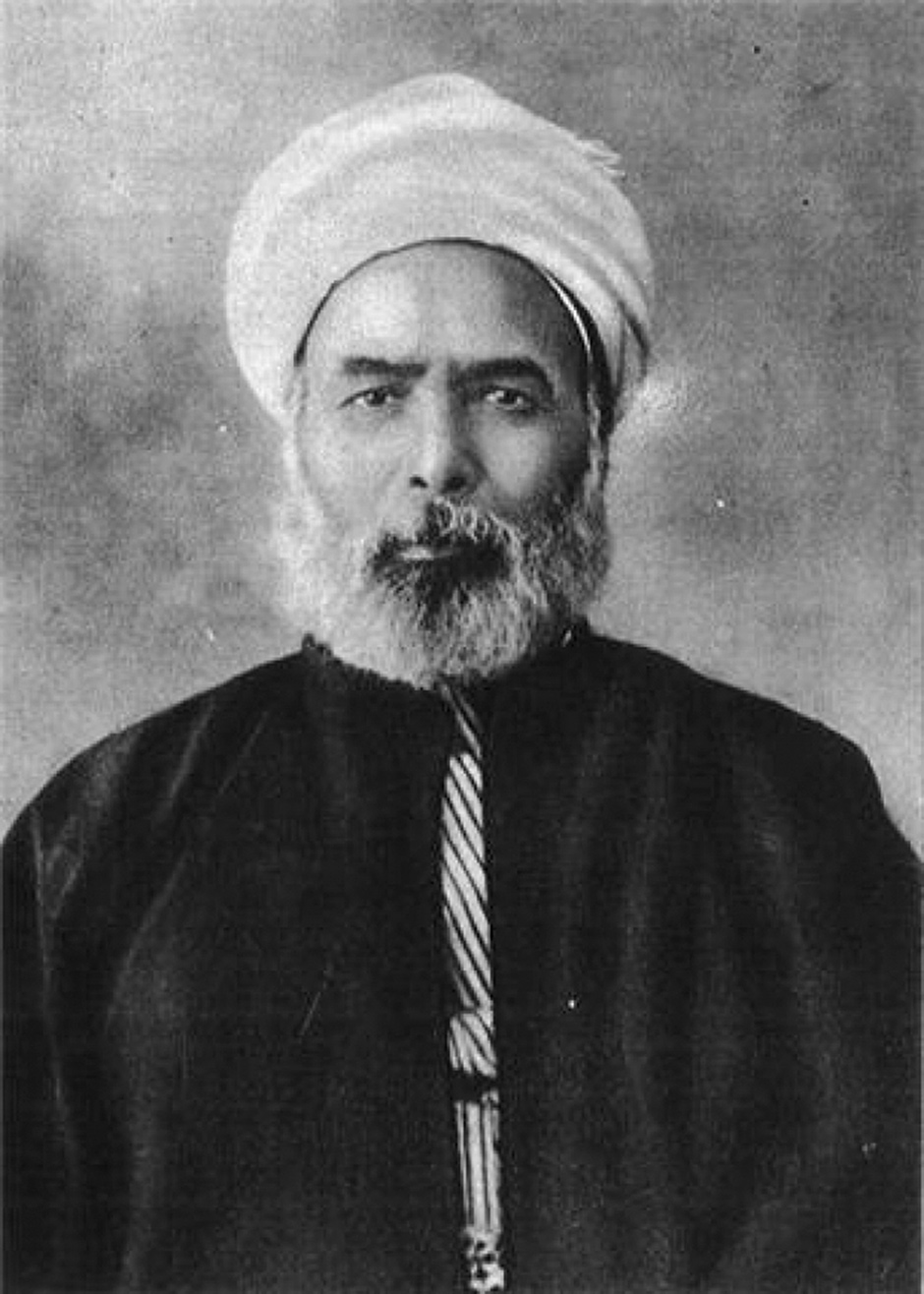 |
| Muhammad Abduh |
Abduh became one of the most highly respected and revered figures in Egypt, although some conservatives opposed his reforms and open-mindedness while some more radical nationalists berated him for not being liberal enough.
In his publications, including Face to Face with Science and Civilizations and Memoirs, he urged the spiritual revival of the Muslim and Arab world, arguing that Islam was not incompatible with modern science and technology. He also stressed the importance not only of law but of reason in Islamic society.
Originally from Syria, Muhammad Rashid Rida was a follower of Abduh. He moved to Egypt and founded the highly respected journal al-Manar. His writings had a wide influence on Islamic thought, and he became one of the foremost spokespersons for what has become known as political Islam. Rida also discussed socialism and Bolshevism and the role religion should play in contemporary political life.
Egyptian Abdullah al-Nadim edited several satirical journals and was a staunch supporter of the Urabi revolt of 1881–82. He also knew Jamal al-Afghani. Al-Nadim was exiled to Istanbul after his fiery nationalist stance earned him the enmity of the British.
Al-Nadim spoke openly about the growth of the nation (watan) and was one of the first modern Egyptian nationalists. In 1899 Anis al-Jalis started an Egyptian magazine that carried articles dealing with the role of women in society.
A new educated elite emerged as graduates of the many government and other schools that had been established as part of the reforming era of the Tanzimat entered public life. In the Sudan, the British founded Gordon College to educate male youth for government service.
Other schools founded by missionaries included the Syrian Protestant College (American University of Beirut, AUB), the Jesuit University St. Joseph in Beirut, and various Russian Orthodox schools scattered throughout Greater Syria.
The Alliance Israelite sponsored schools for Jewish students throughout the Ottoman Empire. Separate mission schools were also established for girls. A spirit of outward-looking, pro-Western thought prevailed, and many of the elites had extensive experience with the Western world. Many were bilingual in French or English.
Nineteenth-century Arab intellectuals, many of whom were Christians, fostered a literary renaissance with a revival of interest in the Arabic language. Some sought to modernize Arabic prose and poetic styles.
Butrus Bustani was one of the era’s foremost experts in the Arabic language. He also wrote a multivolume encyclopedia with thoughtful entries on science and literature as well as history. Numerous newspapers were published, especially in Cairo and Beirut.
Al-Muqtataf produced in Cairo by Yacoub Sarruf and Faris Nimr was one of the most famous. In 1875 the Taqla family founded al-Ahram, which became the premier newspaper in the Arab world. Many of these new journals were published in Egypt, where there was greater freedom of the press afforded by the British than in Ottoman controlled provinces.
Nationalism spread around the world in the 19th century, and the Arab provinces were no exception. A generation of Arab nationalists began to talk and write about the relationship of the Arabs within the Ottoman Empire and the role religion should and did play in modern nationalism. These early nationalists did not deny the importance of religion but used nationalism as their point of reference.
The first group that dealt with the controversial issue of separation from the Ottoman Empire on the basis of national identity was formed at the Syrian Protestant College in Beirut in 1847. Its members, who met secretly to avoid prosecution from the Ottoman intelligence services, included Faris Nimr.
They met under the guise of being a literary society; while the members did discuss literature they also delved into the important political questions facing the declining Ottoman Empire as well as the emergence of nascent Arab nationalism.
Various groups continued to meet at the college from 1847 to 1868 when a Beirut society began. Its members discussed the key political issues of Arab identity. The so-called Darwin affair of 1882 caused a number of the leading figures of the movement to leave the college.
In a public address, Dr. Edwin Lewis, a professor at the college, discussed Darwin’s theory of evolution; his positive conclusions about Darwin’s controversial theory roused the enmity of conservative American Christians on campus.
They attacked Lewis in print and forced his resignation. Several of the liberal Arab junior faculty, including Nimr and Sarruf, resigned in outrage and moved to Cairo, where they became leading figures among Christian Arab secularists.
Abd al-Rahman al-Kawakibi was born in Syria, but after his writings about Arab identity roused the enmity of Khedive Abbas Hilmi, he left Syria and became a frequent contributor to al-Manar, the journal edited by Rashid Rida.
In his writings, Kawakibi discussed the key role of the Arabs in Islam; he also described the decadence and weaknesses of the Ottoman Empire. He stressed the importance of Arab unity. Another Arab nationalist, Jurji Zaidan, wrote for the journal al-Hilal.
Whereas pan-Islamists, such as al-Afghani, believed in the supremacy and integrity of the Islamic legacy, panArabists like Zaidan emphasized its uniquely Arab character and the importance of history, language, and culture over religion. The ideas of these early Arab nationalists would come to fruition with World War I and the collapse of the Ottoman Empire in the early 20th century.

British Occupation of Egypt
 |
| The British militarily defeated Egyptian nationalist at the Battle of Tel-el-Kebir in 1882 |
Through diplomatic negotiations in 1881–82, the British and French reached an agreement whereby the French occupied Tunisia in North Africa and Britain took Egypt.
The British militarily defeated Egyptian nationalist forces led by Ahmed Urabi at the Battle of Tel-el-Kebir
 in 1882. The Dufferin Commission was then sent to Egypt to make recommendations as to what should be done.
Initially, the British claimed that the occupation was a temporary one, but geopolitical considerations and ongoing conflict in the Sudan under the Mahdi led to the long-term occupation of Egypt by the British.
    |
The British superimposed their own administration and became the de facto rulers of Egypt while maintaining the facade of Egypt as an autonomous province of the Ottoman Empire as arranged during the rule of Muhammad Ali.
The khedive was retained, with British advisers in the key government offices. A nonelective legislative council of Egyptians served in an advisory capacity. This two-tiered, often-cumbersome administration led to British control over all aspects of government from the judicial to financial to education.
Evelyn Baring, later Lord Cromer, was appointed consul general in 1883. Cromer was the virtual ruler of Egypt until 1907, when he was forced by the British government to retire following an increase of Egyptian nationalist discontent.
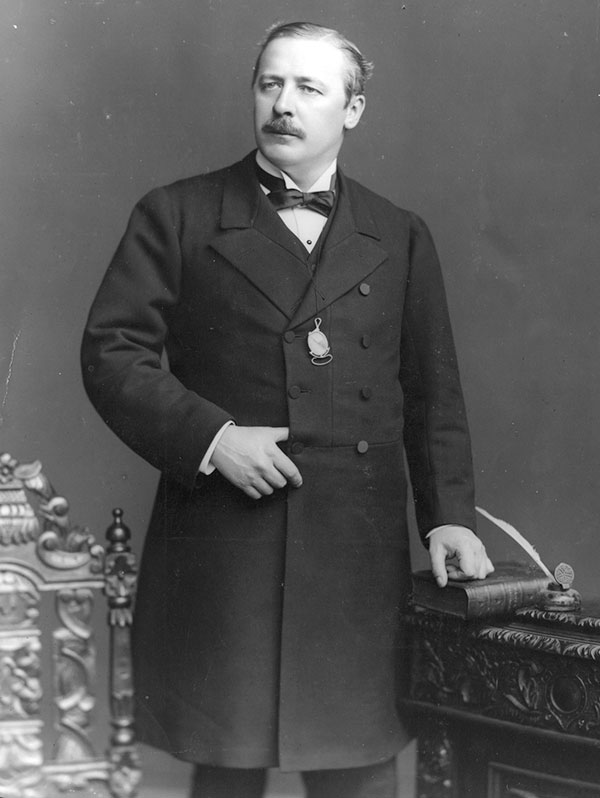 |
| Evelyn Baring, 1st Lord of Cromer |
A fiscal conservative, Cromer attempted to lessen the financial burdens on the fellaheen (peasants) but devoted few resources to education or other social programs.
The British did improve the irrigation systems in Egypt and also abolished forced labor. The railway system that benefited British commercial interests was also extended to the detriment of road and water transportation systems.
Mixed courts dealt with all cases involving foreigners, and civil courts with Egyptian judges and lawyers served the Egyptian population. A lively press that covered a wide range of political and social issues also developed, although the British carefully monitored it for subversive or anti-British opinions.
Over the years the number of British advisers proliferated. The presence of foreign troops and often arrogant British bureaucrats increased nationalist opposition to the occupation, particularly among the urban educated youth.
Mustafa Kamil
 who led the Watan (Nation) Party from 1895 until his death in 1908 was one of the most vociferous and fiery of the new generation of Egyptian nationalists.
Much to the dismay of the British, Tewfik’s successor, Khedive Abbas Hilmi supported the nationalist cause. Mounting Egyptian nationalism led to the emergence of political parties that the British vainly attempted to control. British control was not formalized until Egypt was declared a British protectorate with the outbreak of World War I in 1914.
Abdul Hamid II
 |
| Abdul Hamid II |
Abdul Hamid II, who reigned 1876–1909, became sultan after his brother, Sultan Murad V, was deposed because of mental illness. He came to power by promising reforms and support for a constitution, but he soon reasserted the sultan’s traditional authoritarian powers.
At the time, the Ottoman Empire was beset with problems. The empire was deeply in debt, nationalist rebellions had broken out in Bosnia and Bulgaria, war raged in Serbia and Montenegro, and Russia threatened to further its expansion into Ottoman territories.
However, the promulgation of a constitution and establishment of a parliament in 1877 seemed to promise new reforms that would perhaps revive the empire’s former strength.
    |
The constitution, drawn up by the able administrator and reformer Midhat Pasha, was shortlived, as Abdul Hamid II used the 1877 war with Russia as the excuse to disband parliament and suspend the constitution. He then removed Midhat from power and sent him into exile.
Abdul Hamid II hired German advisers to rebuild the army and administer the finances. To the dismay of the British, German influence within the empire increased steadily until World War I.
Abdul Hamid II turned a blind eye to the British occupation of Egypt, although ostensibly Egypt remained part of the Ottoman Empire, it became a de facto part of the British Empire ruled by British “advisers.”
Abdul Hamid II limited the power of government bureaucrats and concentrated power within the sultanate. He also established strict censorship over publications and monitored political activities through a network of secret agents.
Although most of his predecessors had paid scant attention to their title as caliph, Abdul Hamid II reemphasized his role as caliph and protector of the Muslim world.
Abdul Hamid II vainly attempted to use the appeal of the pan-Islamic movement, popularized by Jamal al-Din al-Afghani, to counter the growing nationalism within the diverse Ottoman Empire. The construction of the Hijaz railway to facilitate the pilgrimage to Mecca and Medina was part of his campaign to foster Islamic support.
Abdul Hamid II also rejected the Zionist
 offer made by Theodor Herzl to pay a portion of the huge Ottoman debt in exchange for an Ottoman charter allowing Zionist colonization of Palestine.
Herzl was told that the sultan was not in the business of “cutting off his arm,” meaning that Palestine was considered an integral part of the empire, but that Jews were welcome to live there.
Fearing assassination, he made himself a virtual prisoner in the palace of Yildiz. Abdul Hamid’s authoritarian rule increased discontent within the military. As a result, the Young Turks, dominated by army officers, took over the government in 1908.
Abdul Hamid II was forced to accept the reinstitution of the 1876 constitution. In 1909 he abdicated in favor of his brother, who became Sultan Muhammad V. Abdul Hamid II spent his last years under house arrest at the Beylerbeyi Palace in Istanbul, where he died in 1918.
Khedive Ismail
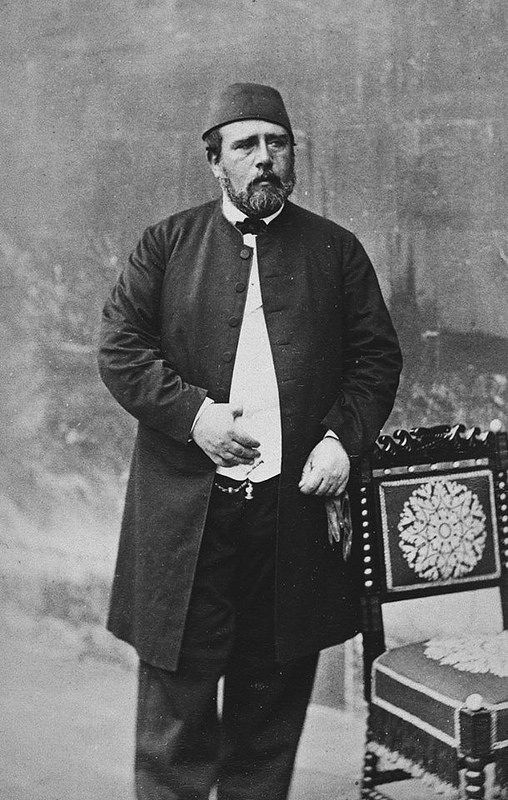 |
| Khedive Ismail |
Khedive Ismail was heir to the throne of Muhammad Ali and became khedive (viceroy) in 1863. A keen modernizer, Ismail had grandiose plans to modernize Cairo along French architectural lines as well as to Westernize Egypt.
Ismail was against the slave trade and extended Egyptian control in Sudan. During his reign the Suez Canal was opened with great fanfare as well as enormous expense to the regime. Ismail also initiated numerous irrigation projects and built lavish and costly palaces.
He used the increased profits from the sale of cotton, Egypt’s main cash crop, to finance his plans. Cotton prices soared when cotton from the United States became unavailable on the world markets owing to the Civil War. The khedive covered the cost
    |
Khedive Ismail was a progressive leader in Egypt, opposing slavery and seeking to modernize his nation. overruns by borrowing extensively from foreign banks, especially from the French. Once the United States reentered the market, cotton prices plummeted, and Ismail found his nation deep in debt.
He was forced to sell his Suez Canal shares (44 percent of the total stock holdings) at bargain prices to Great Britain, thereby giving Britain controlling interest in the Canal.
As the debts continued to grow, France and Britain established the Caisse de la Dette in 1876 to ensure repayment. Ismail was forced to abdicate in favor of his son Tawfik, a weak and malleable ruler, in 1879. Control over Egyptian debt repayment enabled the two imperial powers gradually to take over Egyptian finances and led to the British takeover of the country by 1882.
Abdul Kader ibn Moheiddin al-Hosseini
 |
| Abdul Kader ibn Moheiddin al-Hosseini |
Abdul Kader (Abd al-Qadir) was born into a religious family. His father was the sheikh of one of the major Sufi orders in Algeria, and he had a religious education. Abdul Kader led the armed resistance to the French occupation of the country from 1832 to 1847.
The leading sheikhs pledged allegiance to Abdul Kader, who was known as Amir al-Monenin (Prince of the Faithful). Abdul Kader was able to unify the Algerian tribes based on the rule of Islam. He levied taxes, minted coins, and supported education with the advice of a council of notables.
Abdul Kader successfully employed guerrilla warfare tactics to defeat the better armed French forces. He defeated General Camille Trézel, who was subsequently replaced by General Bertrand Clauzel. Although Clauzel managed to extend French control over Algerian cities, he was defeated by Kader’s forces and removed from command in 1837.
    |
The French and Abdul Kader then signed the Treaty of Tafna, whereby the Algerians controlled the territory in the hinterland and the Kabylia in the east, and the French retained control over Algiers, Oran, and Constantine.
In 1839 the French renewed the war. From 1841 to 1847 the new commander, General Thomas Bugeaud, used surprise hit-and-run tactics with superior armaments to put the Algerians on the defensive. Abdul Kader attempted to carry on the struggle from neighboring Morocco, but the French retaliated by attacking Moroccan ports and land forces.
The Moroccan ruler then pledged to limit Abdul Kader’s movements. In 1847 Abdul Kader surrendered to the French. The French had developed a grudging respect for Abdul Kader, who was released after several years in prison and given a French pension.
He traveled to Istanbul, where he was well received by the Ottomans, before moving to Damascus, Syria. There, he notably saved many Christian lives by granting them safe haven in his own home during the 1860 confessional riots. Abdul Kader died in Damascus in 1882.
Midhat Pasha
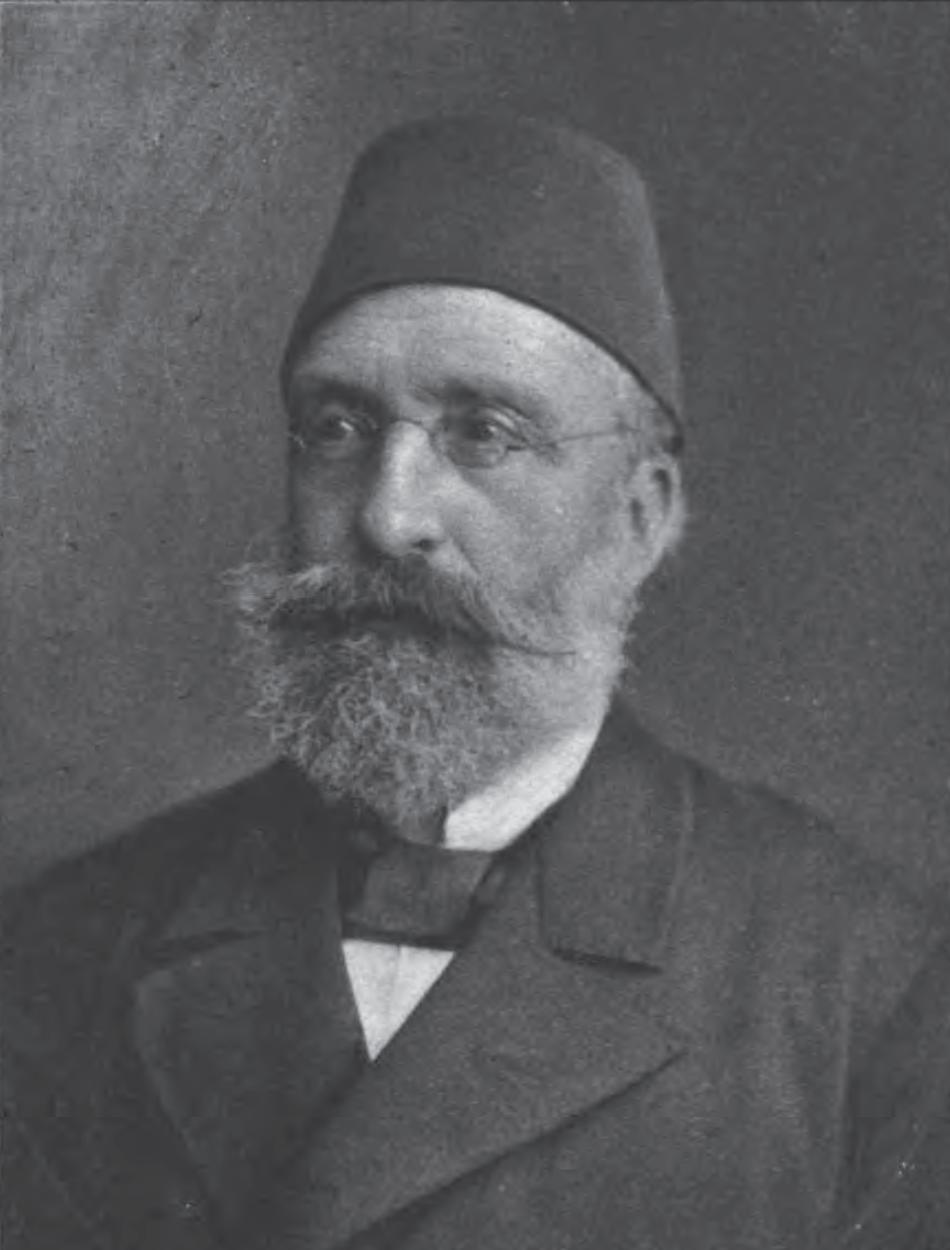 |
| Midhat Pasha |
Midhat Pasha entered the Ottoman government service as a young man and rose quickly within the ranks. He worked in Syria and then in Istanbul before being appointed governor (vali) over Bulgaria in 1857. Midhat quickly restored order to the rebellious province and instituted a wide-ranging series of modernization projects.
While he supported modernization of the empire, Midhat opposed local nationalist sentiments and repressed Bulgarian nationalism. His anti-panSlavic stance incurred the enmity of Russia and owing to Russian pressure he was withdrawn from Bulgaria and brought back to Istanbul.
Midhat served as provincial governor over Baghdad from 1869–72. As governor of Baghdad, he in effect ruled all of Iraq. He extended Ottoman influence into the Arabia Peninsula and, as in Bulgaria, worked to modernize the territory. He modernized Baghdad with the construction of new roads and a bridge across the Tigris River
 , a bank, and textile factory.
    |
He also improved shipping lanes for the Shatt al-Arab leading into the Persian Gulf and enlarged irrigation projects to increase productivity and income. Midhat also efficiently applied Ottoman Land Law to regularize and register land titles and the collection of taxes.
Midhat served as Grand Vizier from 1876–77 and was accorded the title of pasha. However, Midhat’s efficiency, financial acuity, and honesty threatened many increasingly corrupt officials who frequently intrigued against him. On the other hand, the pro-reform Young Ottomans called Midhat “the ideal statesman.”
Midhat supported the programs of the Young Ottomans who wanted the implementation of a constitutional monarchy over the Ottoman Empire. Midhat and the Young Ottomans sought to halt the further erosion of Ottoman financial independence to European creditors and to prevent national uprisings in the Balkans.
In 1876, the Young Ottomans and Midhat were instrumental in ousting Sultan Abd al-Aziz, who was subsequently assassinated, and placing Murad V on the throne. Murad V only served a few months before mental illness forced his removal. His brother Abdul Hamid II became the new sultan after promising to implement the constitution written by Midhat and to support reforms.
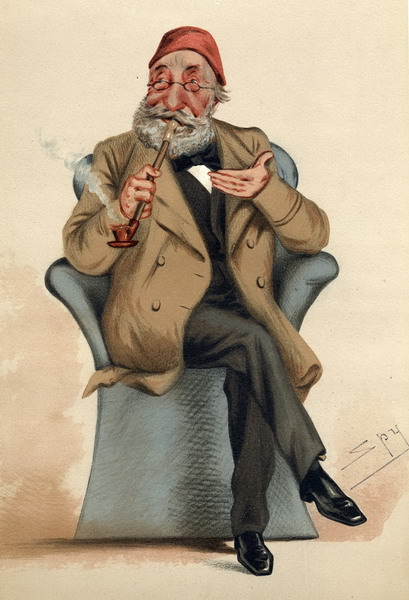 |
| Midhat Pasha in cartoon version |
To escape further persecution, Midhat then toured Europe and observed the House of Commons in session in London. He was called back to serve as governor of Syria, but within months the sultan reconsidered and brought him back to be tried with others for the killing of Abd al-Aziz.
In a highly biased trial, Midhat was sentenced to death, but following pressure from the British his sentence was commuted to banishment. He was exiled to Taif, Arabia, where an agent of the sultan probably was responsible for his death by strangulation in 1884.
Muhammad Ali
 |
| Muhammad Ali |
An Ottoman janissary of Albanian origin, Muhammad Ali became the founder of modern Egypt. Following the Napoleonic invasion and short-lived British occupation of Egypt, Muhammad Ali and a number of other janissary forces
 were sent to reassert Ottoman control in 1802. Muhammad Ali had outmaneuvered rival janissaries for leadership by 1806.
Muhammad Ali then cleverly aligned himself with the weaker of the perennially warring Mamluk factions that had previously governed Egypt to defeat the stronger. He eliminated the remaining Mamluks by inviting them to a celebration at the heavily fortified citadel overlooking Cairo in 1811.
Once the Mamluks were securely inside the high walls of the fort, the janissaries massacred them, leaving Muhammad Ali the sole ruler. Pledging allegiance to the Ottoman sultan, he was appointed pasha of Egypt and began an ambitious program to increase the strength of his armed forces and to build a new navy. The army was conscripted from the Egyptian fellaheen, or peasantry, and ultimately reached over 100,000 men.
    |
To finance military expenditures, Muhammad Ali increased taxes and established government monopolies over the economy. Monopolies controlled the sale of oil, coffee, and Egyptian products including tobacco, grains, sugar, and cotton. He also moved the Egyptian economy toward the production of cash crops, especially tobacco and the highly desirable Egyptian long-grain cotton.
Through government support, Muhammad Ali underwrote the creation of small industries in textile manufacturing, food processing, and some armaments. This began a process of industrial modernization that was largely halted by the British occupation of Egypt at the end of the 19th century.
The irrigation systems were expanded and water and road transport systems were developed throughout the area. Medical care improved, although cholera and malaria remained problems. A new administrative elite was created. The top officials were predominantly of Turkish origins; like Muhammad Ali, they spoke Turkish rather than Arabic.
 |
| Muhammad Ali and his officials |
Although he was illiterate, Muhammad Ali valued education and established a military training school and sent students at government expense to European universities. Muhammad Ali made one graduate Rifa’a Rafi al-Tahtawi director of a new School of Languages; the school was responsible for the translation of many European, especially French, political and philosophic works. The Bulaq Press published hundreds of books in Arabic, including many translations from European works. These influenced a new generation of Arab and Islamic reformers in the late 19th century. An official gazette was also issued.
As leader of Egypt, Muhammad Ali was involved in four major wars. At the behest of the Ottoman sultan, he sent his sons Abbas and Ibrahim to crush the puritanical Islamic reformist movement, the Wahhabis, who threatened Ottoman control over the holy cities of Mecca and Medina in the Hijaz from 1811–81. The Wahhabis were defeated in their stronghold in the Nejd (in northern modern-day Saudi Arabia). After making a pilgrimage to Mecca, Muhammad Ali withdrew his troops in 1824, thereby allowing the Wahhabis to regroup and emerge as an even stronger force at the end of the century.
In 1820 Muhammad Ali launched military campaigns into the Sudan. He wanted new recruits and slaves for his army and hoped to obtain gold to help finance his army and navy. Although his troops were militarily successful, most of the army recruits and slaves died of diseases and the gold resources failed to materialize.
In 1822 the ongoing Greek War of Independence threatened Ottoman control in the Balkans, and the sultan again called on Muhammad Ali to use his new navy and army to defeat the Greeks and their allies. Muhammad Ali took the island of Crete in 1824 and met with initial success. But in 1827 his new fleet was destroyed at the Battle of Navarino Bay. Muhammad Ali was ready to negotiate, and he lost Crete to the British in 1840.
He then turned his attention toward Palestine and Syria, where he hoped to enhance his prestige as well as stop the flow of draft dodgers from Egypt who sought to escape the much-hated state conscription. He also hoped to obtain wood to rebuild his navy. Syria had suffered under a long period of Ottoman misrule and initially offered little opposition to Muhammad Ali’s troops, who under Ibrahim’s command took Acre in 1832. Ibrahim advanced to Konya, deep inside the Anatolian Peninsula, and might have advanced to Istanbul, but he was stopped by Muhammad Ali.
Although he wanted further territory, Muhammad Ali recognized that the European powers, who were engaged in a long-term diplomatic rivalry over the so-called Eastern Question, or what to do about the weakened Ottoman Empire, would not allow it to collapse. When Russia offered to support the sultan in the war against Muhammad Ali, Great Britain, which opposed Russian advances in the Black Sea, stepped in to force negotiations.
Under the Kutahya Convention of 1833, Muhammad Ali retained control over Greater Syria in exchange for a small yearly tribute to the sultan. He thereby controlled key trade routes and the Muslim holy cities in Arabia.
Ibrahim was made governor of Syria, but efficient tax collection and conscription led to local dissent and rebellions. Wishing to reassert his authority, Sultan Mahmud II was confident that his newly reformed army would be able to defeat Muhammad Ali.
Ottoman forces attacked in 1838, but at the Battle of Nazib in northern Syria, Ibrahim routed the Ottoman army in 1839. Fearing Muhammad Ali’s mounting power and the collapse of the Ottoman Empire, Great Britain intervened.
Britain rallied the support of Russia, Prussia, and Austria and offered Muhammad Ali control over Egypt for life if he immediately agreed to a settlement. When Muhammad Ali refused, a four-power blockade was put in place, and British marines took Acre in 1840. Recognizing defeat, Muhammad Ali withdrew from Syria.
In 1841 the sultan granted Muhammad Ali and his heirs the hereditary right to rule Egypt as khedives; however, the Egyptian army was limited to 18,000, a huge decrease from its size during the zenith of Muhammad Ali’s power. In 1848 Ibrahim, the presumed heir, died, before his father. Thus when the ailing Muhammad Ali died shortly after Ibrahim, his grandson Abbas succeeded to the throne.
The conservative Abbas halted many of Muhammad Ali’s development projects, but they were resumed after Said, Muhammad Ali’s son and Abbas’s uncle, and later Ismail, another of Muhammad Ali’s grandsons, became khedives. The dynasty established in Egypt by Muhammad Ali survived until it was overthrown in a military-led revolution in 1952.
Muhammad al-Mahdi
 |
| Muhammad al-Mahdi |
In 1881 he declared himself the Mahdi or “rightly guided one”; according to Islamic tradition, the Mahdi was to appear to foreshadow the end of an age. The Mahdi was sent to establish the faith and custom of the prophet. The Mahdist movement in the Sudan was a combination of nationalist and religious belief and was seen by many as the beginning of Sudanese nationalism.
The Mahdi established his state in a power vacuum when the Ottoman Empire, the ostensible governing authority, and Egypt, in the midst of the Urabi revolt, were weak and torn by revolts and local problems. In addition to his undoubted religious appeal and charisma, the Mahdi’s refusal to pay Ottoman or Egyptian taxes attracted further support among the Sudanese.
    |
The taxes levied by the Mahdi were generally lower than those of the Ottomans. He garnered tribal support and crushed internal uprisings. In 1882 the Mahdi took el Obeid, the capital of western Sudan.
He struck money in the name of the new Mahdist government, pacified most of the country, and ousted the remaining Turkish garrisons. He established a theocratic state based on religious law. The Mahdist movement was another of the 19th-century Islamic revival movements such as the Sanusiya in Libya and the Wahhabis in Arabia.
Alarmed by the rising new power in the south, the British who had occupied Egypt in 1882, sent a military expedition led by William Hicks to defeat the Mahdi. Without proper supply routes or knowledge of the local terrain, Hicks, with a force of Egyptian soldiers, moved deep into Sudanese territory where his expedition was cut to pieces by the Mahdi’s army in 1883. Cut off from Egypt and outside supplies, foreign missionaries and adventurers in the Sudan were taken prisoner by the Mahdi; some remained under virtual house arrest for years.
As the Mahdi moved closer to the capital of Khartoum, Charles “Chinese” Gordon, so named for his role in defeating the Boxer Rebellion, was sent to evacuate the remaining British forces. A Christian zealot, Gordon believed it was his mission to stop slavery in the Sudan and to secure the territory.
Ignoring orders to withdraw, he was trapped in Khartoum as the Mahdi’s army lay siege to the city. The siege lasted from 1884 until late January 1885. A British relief expedition was sent to rescue Gordon, but before it arrived the Mahdi’s forces, known as dervishes in the West, took the city.
Against the Mahdi’s orders, Gordon was killed and beheaded. His head was then presented to the Mahdi as a sign of the victory. The British relief forces arrived on the outskirts of Khartoum two days too late and, recognizing their untenable position, promptly retreated back to Egypt.
Gordon became a martyr to the cause of British imperialism. Although the British prime minister William Gladstone favored withdrawal from the Sudan, the British public, including Queen Victoria, were outraged and demanded that Gordon’s death be avenged and the Mahdi destroyed.
The Mahdi died shortly after the taking of Khartoum in 1885. He was succeeded by Abdallahi, as the khalifa, or companion. Abdallahi struck money with an Omdurman mint mark and legislated proclamations and decisions on points of law.
He defeated the Abyssinians (in present-day Ethiopia) in 1889, but shortly thereafter the Mahdist state faced internal uprisings, a plague of locusts (a recurring ecological problem in much of Africa), and a resulting famine.
Meanwhile, the British remained determined to defeat the Mahdist state. The British military hero Herbert Kitchener was appointed commander in chief of Egyptian forces to take the Sudan. Avoiding the mistakes of previous expeditions, Kitchener extended the railway system deep into southern Egypt to ensure efficient movement of supplies and men.
In 1898, Kitchener met the Mahdist army at the Battle of Omdurman, where with superior armaments his army easily defeated the larger but poorly armed dervishes. Kitchener then moved to eradicate any traces of the Mahdist state, even destroying the Mahdi’s tomb. However, the movement remained a latent force in the Sudan, and the Mahdi’s heirs emerged as political leaders when the Sudan became independent in the second half of the 20th century.
Muslim Rebellions in China
 |
| Muslim Rebellions in China |
The three Muslim rebellions against the Qing (Ch’ing) dynasty in China in the 19th century were caused by economic, ethnic, and religious problems. The Xinjiang (Sinkiang) Rebellion also had diplomatic implications.
The first was the rebellion in Yunnan, known in the West as the Panthay Rebellion, from a corruption of the Burmese word for “Muslim.” Between 20–30 percent of the population of Yunnan, located in southwestern China, is Muslim, descended from Central Asian Muslim troops sent by Kubilai Khan to garrison the region in the 13th century. They were discriminated against by the majority non-Muslims and the Han and Manchu officials because of their distinctive lifestyles.
Disputes over mining rights led to the rebellion in 1855 under Du Wenxiu (Tu Wen-hsiu), who proclaimed himself Sultan Sulieman of a Muslim kingdom with capital at Dali (Tali). After enjoying initial successes, a new governor appointed by the Qing was able to eliminate the rebels in 1873. Du sought British help in vain and assassinated.
    |
The second Muslim rebellion occurred in Shaanxi (Shensi) and Gansu (Kansu) Provinces in northwestern China between 1862 and 1873. It is also called the Tungan Rebellion, after the approximately 14 million Chinese Muslims in these provinces who were of mixed Central Asian and Chinese descent; although largely assimilated in language and customs, they nevertheless suffered from discrimination.
The rebellion broke out in 1862 as a result of the incursion of Taiping rebels into Shaanxi, igniting local grievances. The situation was very confused because the Muslims were divided into the warring Old and New Sects and was further complicated by incursion of another rebel group, the Nian (Nien), into Shaanxi in 1866, who joined forces with the Muslims.
The Qing court appointed Zho Zongtang (Tso Tsung-T’ang), a great general-statesman who had helped defeat the Taiping Rebellion, governor-general of Shaanxi-Gansu, in charge of suppressing the Tungan rebels. Zuo could not take up this task until he had suppressed the Nian Rebellion in 1868, after which he spent six years of hard campaigning before pacifying these two provinces.
Xinjiang, in the far northwestern part of China, was its historic gateway to the West along the ancient Silk Road. After several campaigns it was conquered in 1759 by Emperor Qianlong (Ch’ien-lung), who expelled the previously influential religious leaders called khojas to Khokand beyond China’s border.
After 1759 Xinjiang was governed by a military governor from Ili, who delegated local chieftains called begs to control the Muslims called Uighurs
 . It was garrisoned by Manchu banner troops concentrated on the north and south of the Tianshan Mountains.
 In 1864 as the Uighurs rebelled, Yakub Beg (1820–77), a Khokandian adventurer, invaded Xinjiang. Preoccupied with rebellions elsewhere, the Qing government was unable to respond; thus Yakub Beg gained control of parts of northern Xinjiang (Kashgaria) and proclaimed himself ruler. Russia took advantage of China’s disarray to occupy Ili.
Xinjiang became part of the Great Game
 between Great Britain and Russia for control of Central Asia. After suppressing the Muslim rebellion in Shanxi and Gansu, the Qing court appointed Zuo Zongtang imperial commissioner to suppress the Xinjiang Rebellion
 .
. An experienced and careful commander, he was able to crush the rebels in 1877. Yakub Beg assassinated, and Xinjiang was pacified. Russia was compelled to restore the Ili to China in the Treaty of St. Petersberg in 1881. On Zuo’s recommendation Xinjiang received the status of province and was fully integrated into the Qing Empire.
The three Muslim rebellions were indicative of the decline of the Qing dynasty. Their suppression, along with the defeat of other rebellions, would give a new lease on life to the dynasty.
Subscribe to:
Posts (Atom)